

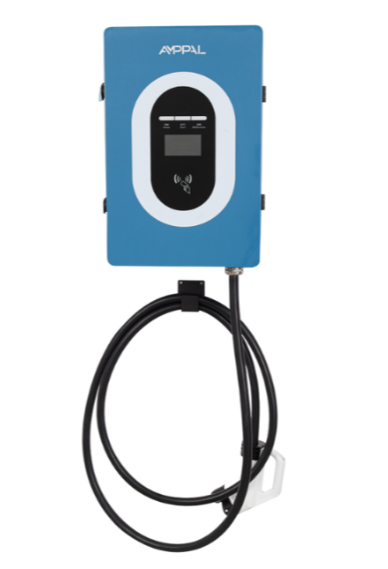
The commercial transition to electric vehicles (EVs) is accelerating, driven by emissions mandates, operational cost savings, and growing consumer preference for sustainable logistics. While early fleet electrification efforts relied on slower AC charging, modern high-utilization fleets—such as last-mile delivery vans, taxi services, and heavy-duty urban transporters—are finding that speed and spatial efficiency are non-negotiable requirements.
This shift has created a critical demand for compact, powerful infrastructure solutions. The answer is the DC wall mount charging station. These units deliver the necessary high-speed direct current (DC) charging capabilities typically found in large, floor-standing units, but in a significantly smaller, depot-friendly format. This article explores why the DC EV wall mount charger is fast becoming the backbone of efficient, scalable fleet electrification.
Why Fleet Managers Need the Speed of a DC EV Wall Mount Charger
For any commercial fleet, vehicle uptime directly translates to profitability. A van or truck sitting idle for eight hours while charging is an asset generating zero revenue. This is the primary reason why fleet managers are moving decisively towards DC charging solutions over standard Level 2 AC chargers.
DC fast chargers bypass the vehicle’s onboard converter, delivering power directly to the battery. This reduces the charging time from hours to minutes, fundamentally changing fleet logistics:
1.Shift Optimization: Vehicles can be charged during short breaks, between routes, or during driver shift changes, eliminating the need for lengthy overnight dwell times and allowing for 24/7 asset utilization.
2.Route Flexibility: Fast charging eliminates “range anxiety” and allows for more complex, high-mileage routes, as drivers know they can top up quickly at the depot if an unexpected run is required.
3.Future-Proofing: As electric heavy-duty vehicles (HDVs) and newer light-duty vehicles (LDVs) arrive with larger batteries and 800V architectures, DC charging is the only way to effectively manage their energy demands.
Minimizing Downtime: Optimizing Depot Layouts with Wall-Mounted DC Charging
The traditional image of a DC fast charger is a large, pedestal-mounted cabinet requiring significant floor space—a major constraint in often-packed commercial depots, urban logistics hubs, and underground parking facilities.
The wall-mounted format revolutionizes this spatial challenge:
- Compact Footprint: By mounting the unit directly to a wall or structural column, the DC wall mount charging station preserves valuable floor space for vehicle maneuvering and parking.
- Scalability: Fleets can install these units in a distributed, modular fashion, placing them strategically closer to parking spots without major civil works, significantly speeding up deployment.
- Safety and Organization: Wall mounting inherently keeps the unit and cable management system off the ground, reducing trip hazards and preventing equipment damage from accidental vehicle contact. This contributes to a safer, more organized depot environment.
A leading energy solutions provider like AMPPAL has focused its engineering efforts on optimizing this compact, high-power format to meet the stringent demands of commercial operations.
Introducing the DC Wall Mount Charging Station from AMPPAL: Power and Precision
The technical specifications of the DC wall-mounted units from AMPPAL highlight the fusion of high power density with intelligent management necessary for fleet environments. These solutions are engineered to handle the constant, high-demand cycling required by commercial assets.
Dynamic Power Capabilities
The AMPPAL DC wall-mounted charger series is available in versatile power ratings, typically ranging from 20kW to 40kW. While this range ensures rapid charging speeds far exceeding Level 2 units, the unit’s operational capacity is equally crucial:
- High Voltage Output: The chargers support a wide output voltage range, often spanning 200V up to 1000V DC. This future-proof capability ensures compatibility with current 400V architectures and emerging 800V commercial vehicles, including long-haul trucks and high-capacity buses.
- High Current: With output currents reaching up to 133A, these stations can deliver a substantial energy boost, ensuring that even large-battery commercial vehicles can be brought back online efficiently.
- Efficiency: High-quality DC chargers boast efficiencies of 95% or greater. This minimizes wasted energy, reducing operating costs for the fleet manager and maximizing the return on investment (ROI) of the charging infrastructure.
Smart Management is the Key to Scaling Infrastructure
In a fleet environment, the charging hardware is only as valuable as the network that controls it. Modern DC wall chargers must integrate seamlessly into sophisticated Energy Management Systems (EMS) to truly optimize costs and performance.
AMPPAL charging stations, for instance, are designed to support open communication protocols such as OCPP 1.6 J, which is vital for remote management and integration with third-party software platforms. This connectivity enables critical fleet functions:
- Usage Authentication and Billing: Features like RFID card access, QR code scanning, and password protection ensure only authorized fleet drivers or designated third-party vehicles (such as subcontractors) can initiate a charge. The systems also support various payment models and provide comprehensive offline and online billing options.
- Demand Charge Management: Fleet operators can use the networked capabilities to implement smart charging strategies. By leveraging time-of-use (TOU) tariffs and utilizing features like fixed time or fixed energy charging modes, managers can automatically schedule charging sessions during off-peak hours to avoid costly utility demand charges.
- Real-Time Monitoring: A networked DC EV wall mount charger provides constant data streams on charger status, energy consumption, and vehicle state of charge. This allows maintenance teams to perform proactive diagnostics, ensuring maximized uptime (Mean Time Between Failures – MTBF often exceeds 30,000 hours).
Reliability and Safety in Commercial Environments
Commercial operations often take place in challenging outdoor or industrial settings. Infrastructure must be rugged and safe, mitigating environmental risks and protecting both personnel and vehicles.
Engineered for Resilience
The compact design of the AMPPAL wall-mounted series is paired with robust construction:
- Ingress Protection (IP54): The IP54 rating ensures the enclosure is protected against dust ingress sufficient to prevent interference with the operation of the equipment, and against splashing water from any direction. This makes the units suitable for deployment in exposed depot environments, uncovered parking lots, and industrial settings.
- Thermal Management: The stations utilize efficient forced-air cooling systems, essential for managing the heat generated by high-power DC conversion, allowing for reliable operation in temperatures ranging from -20°C to +50°C or beyond.
Comprehensive Safety Protocols
Safety compliance is paramount for commercial liability. These DC charging systems adhere to strict international standards such as IEC 61851-1:2017 and integrate multiple hardware and software protection features. Key safety mechanisms include:
- Over and under-voltage protection
- Short circuit and overload protection
- Grounding protection
- Integrated emergency stop buttons
- Cable temperature detection (to prevent overheating at the connector)
Conclusion: The Strategic Advantage of Wall-Mounted DC
The convergence of high power, compact design, and smart networking makes the DC wall mount charging station the most strategically sound choice for logistics and service fleets making the switch to electric. Providers like AMPPAL are delivering commercial-grade hardware that not only integrates into constrained urban and depot spaces but also provides the sophisticated energy management tools required for optimizing costs and guaranteeing operational reliability.
Fleet electrification is no longer about simply acquiring EVs; it’s about deploying the right infrastructure to support them. By choosing a high-quality, high-power DC wall charger, fleet managers are securing a future defined by efficiency, lower operating costs, and guaranteed uptime.
