

Information boards and smart signage are becoming more demanding as businesses use digital displays for wayfinding, corporate communication, retail messaging, transportation information, and public announcements. These applications often require viewers to read text and interpret detailed graphics from relatively close distances. A small LED display can provide a practical solution when image clarity, seamless presentation, and flexible content are important. However, selecting the right technology requires more than comparing screen size or resolution.
Why Small LED Displays Suit Information-Rich Applications
Information signage differs from large-format advertising because viewers may need to read smaller text, charts, schedules, maps, or operational data. Pixel pitch therefore becomes an important consideration. It describes the distance between adjacent LED pixels, with smaller pitch generally providing greater pixel density and better support for close viewing.
For corporate reception areas, transportation facilities, retail environments, museums, and other locations where people approach the display, a small LED display can create a more detailed viewing experience. The objective is not simply to select the smallest available pitch, but to match pixel density with the actual viewing distance and content requirements.
Match Resolution with Viewing Distance
Viewing distance should be established before a display is specified. A screen positioned several meters from its audience has different requirements from one installed beside a reception desk or information counter. Industry guidance consistently identifies pixel pitch as a major factor in determining how close viewers can comfortably approach a display.
Content should also be tested at its intended size. Small fonts, thin lines, detailed maps, and high-resolution images can expose limitations that are less noticeable with simple promotional graphics. For system integrators and commercial buyers, reviewing representative content at the proposed viewing distance can provide a more useful assessment than comparing resolution figures alone.
Improve Visual Quality with COB Technology
Chip on Board, or COB, is particularly relevant to fine-pitch LED applications. Rather than leaving individual LED packages exposed in the same manner as conventional surface-mounted designs, COB technology integrates the LED chips onto the board and uses an encapsulation process. This approach can support fine pixel pitches and a more robust display surface.
For information boards, visual consistency is especially valuable because users may spend time reading or comparing information. A professional micro LED display using COB technology can therefore be considered when projects prioritize detailed imagery, high contrast, and a refined appearance.
High Refresh Rates Matter for Digital Signage
Refresh rate is another specification that should not be overlooked. Although viewers may primarily judge a display by its clarity and color, refresh performance becomes increasingly relevant when signage shows moving content or is captured by cameras. A higher refresh rate can contribute to more stable-looking images and reduce visible artifacts in camera-based applications.
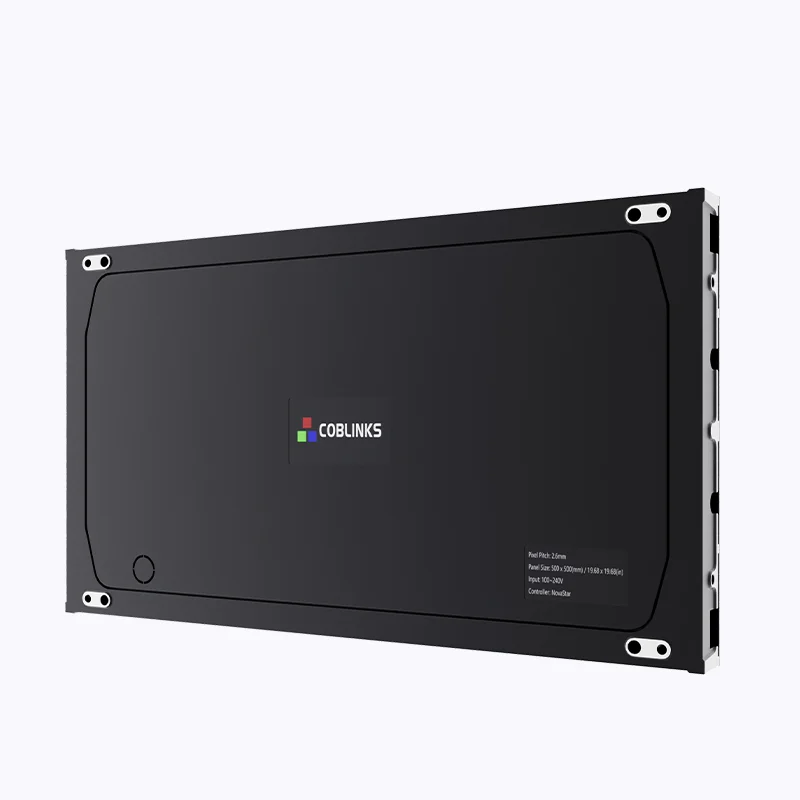
The Coblinks CM-C Series illustrates how this requirement can be addressed. Designed for permanent installations, the professional micro LED display uses a refresh rate of 7680Hz. This makes the series suitable for demanding AV environments where smooth visual presentation and image stability are important considerations.
Use a 16:9 Structure for Modern Content
Aspect ratio can affect how efficiently a display integrates with existing content and AV systems. The 16:9 format remains widely used for high-definition video content, making it a practical configuration for applications that need to display presentations, videos, dashboards, and digital information without unnecessary content cropping.
The CM-C Series adopts a 16:9 aspect ratio, supporting native 4K or 8K resolutions when configured appropriately. This design can simplify content planning for corporate and professional AV environments, particularly where the display needs to work alongside established video sources and production workflows.
Consider Energy Efficiency and Service Life
Commercial information boards may operate for extended periods, so operating efficiency should be considered alongside initial purchase price. A display that consumes less energy during its operating life can help organizations manage ongoing costs, particularly across multiple locations or large-scale signage networks.
The CM-C Series is designed with energy efficiency in mind, helping reduce operating costs while extending panel service life. For businesses deploying multiple displays, these lifecycle considerations can become significant. Procurement teams should therefore evaluate not only the purchase price but also expected operating schedules, maintenance requirements, and long-term system value.
Design Smart Signage Around the User
Technology alone does not make signage effective. Information hierarchy, typography, color contrast, viewing height, screen placement, and content scheduling all influence whether people can understand the information quickly. A high-quality small LED display cannot compensate for poorly structured content or an unsuitable installation position.
For smart signage projects, buyers and integrators should define the primary audience, viewing distance, content types, operating hours, and environmental conditions before selecting hardware. This approach helps ensure that the display technology supports the communication objective rather than becoming the objective itself.
Choosing a Display Platform for Long-Term Applications
Commercial information boards increasingly need to combine visual precision with dependable operation. A professional micro LED display can be valuable where close viewing, detailed content, and premium image quality are central requirements. At the same time, buyers should evaluate refresh rate, aspect ratio, energy efficiency, content compatibility, and installation requirements as part of the complete system.
Coblinks is a technology-driven LED display manufacturer equipped with complete SMT production lines and advanced manufacturing equipment. Its display portfolio includes solutions for permanent installations and rental applications, while the CM-C Series focuses on professional AV environments such as broadcasting and corporate settings. With COB technology, a 7680Hz refresh rate, 16:9 aspect ratio, and support for native 4K or 8K resolutions, the series provides a focused option for demanding information-board and smart-signage projects. Businesses and system integrators can contact Coblinks to discuss a display configuration suited to their application, content, and installation requirements.
