

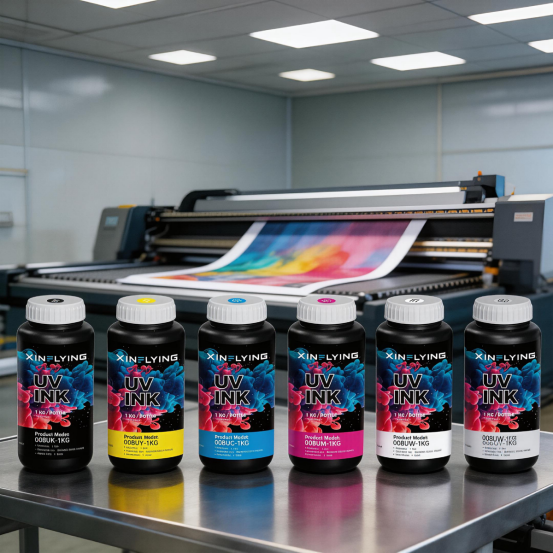
In the rapidly evolving landscape of commercial printing and customized manufacturing, B2B enterprises are constantly seeking innovative methodologies to expand their product offerings without exponentially increasing capital expenditures. Traditional direct-to-object printing has long been the gold standard for personalizing rigid substrates, but it often struggles with irregular shapes, severe curves, and logistical bottlenecks associated with positioning cumbersome items onto flatbed machinery. Enter the transformative technology of ultraviolet direct-to-film transfers, a process that effectively decouples the printing phase from the application phase. The operational success of this hybrid workflow relies almost entirely on the chemical engineering of the printing fluids utilized. By transitioning to high-performance UV Ink, commercial facilities can print intricate, high-definition graphics onto a specialized release film, which are then transferred to virtually any hard surface. This technological leap allows businesses—from promotional goods distributors to custom packaging manufacturers—to adopt agile, on-demand business models. Understanding the impact of these advanced photopolymer systems is essential for production managers aiming to scale their personalization capabilities and secure high-value corporate contracts in a fiercely competitive market.
The Technical Convergence in Commercial Production
To fully leverage the strategic advantages of this transfer technology, one must understand the underlying chemical mechanics that differentiate it from conventional methodologies. The process involves jetting color pigments, followed immediately by a layer of white fluid and a clear varnish, onto a specialized A-film. These layers are instantly cured via LED lamps attached to the printhead carriage. The specific formulation of the uv DTF ink is the critical variable that determines the flexibility of the cured decal and its ability to cleanly release from the film while permanently anchoring to the final substrate. Unlike standard flatbed fluids formulated primarily for rigid adhesion directly onto flat materials, these specialized transfer inks must possess a unique viscoelasticity. They must bend around the contours of a curved thermos or a tapered glass bottle without micro-cracking, yet remain hard enough post-transfer to resist industrial abrasion. When print shops utilize premium-grade formulations, they guarantee that the intricate polymer lattice remains intact during the cold-transfer application. This precise chemical engineering empowers B2B providers to deliver consistent quality across diverse client portfolios without modifying their core production line.
Expanding Substrate Versatility for Corporate Clients
The primary commercial value of this transfer model lies in its unparalleled ability to bypass the physical limitations of traditional flatbed machinery. For decades, B2B suppliers of branded merchandise faced hurdles when attempting to customize items with deep recesses, extreme tapers, or oversized dimensions that simply could not fit beneath a standard printhead gantry. By producing self-adhesive decals, businesses can now offer high-fidelity branding on previously impossible or economically unviable objects. This includes everything from heavy industrial machinery panels and customized corporate electronics to delicate, heat-sensitive ceramics that cannot endure the thermal stress of traditional dye-sublimation. Furthermore, this versatility allows commercial print shops to accept a significantly broader spectrum of corporate fulfillment contracts. Instead of rejecting lucrative orders due to substrate incompatibility or complex geometric constraints, a facility can print sheets of branded decals and apply them off-line. This decoupling means a single roll-to-roll machine can service multiple finishing stations simultaneously, drastically expanding a company’s total addressable market and enabling a highly profitable, scalable approach to corporate branding and large-scale promotional merchandising.
Streamlining Workflows and Reducing Operational Overhead
In high-volume B2B manufacturing environments, operational efficiency directly dictates profit margins. Traditional direct-to-object personalization often involves labor-intensive setups, requiring custom jigs or rotary attachments for every unique product shape, causing massive downtime during job changeovers. The cold-transfer methodology largely significantly reduces these mechanical bottlenecks. Because graphics are printed continuously onto roll media, the printer operates at maximum capacity without the constant pausing and alignment of individual blanks. Production managers can gang-run diverse client logos onto a single roll, maximizing material yield and reducing the dead time associated with flatbed jig swapping. Additionally, the application phase requires zero specialized heat presses or heavy thermal equipment, significantly lowering the barrier to entry and reducing energy consumption overhead. The application is a pressure-sensitive cold transfer executed rapidly by staff, allowing highly skilled machine operators to remain focused on maintaining printer output. This streamlined production model slashes labor costs per unit and shortens lead times, enabling B2B suppliers to aggressively outbid competitors while maintaining healthier profit margins on bulk orders.
Ensuring Durability and Brand Color Consistency
For corporate clients, brand identity is paramount, and the physical durability of that branding reflects directly on their corporate image. When B2B printing partners utilize top-tier photopolymer fluids, they provide a product matching the mechanical resilience of direct flatbed printing. These advanced formulations deliver exceptional resistance to aggressive chemical solvents, ultraviolet photodegradation, and severe physical abrasion, ensuring the applied graphics survive the rigorous lifecycle of industrial or daily commercial use. Equally important is the expanded color gamut and precise optical density that premium fluids offer. Corporate logos often feature strict Pantone color matching requirements that cannot be compromised. High-quality inks provide vivid colors and a brilliant white under-base that completely blocks the color of the underlying substrate, ensuring the logo remains perfectly opaque whether applied to a black metallic casing or clear glass. Furthermore, the specialized varnish layer adds a premium tactile finish that elevates the perceived value of the product. By prioritizing chemical stability, commercial printers solidify long-term trust with demanding corporate accounts, ensuring lucrative, recurring business relationships.
