

Building a private-label aquarium range involves more than adding a logo. Retailers, distributors, and brand owners need to understand minimum order quantities, sample approval, packaging, compliance documents, and production timing before committing a budget.
The right route depends on product category and business stage. A startup may begin with an existing heater and custom packaging, while an established brand may need functional changes or new tooling. These choices affect cost, launch timing, and inventory risk.
Start With a Defined Project Brief
Before contacting aquarium suppliers, prepare a brief covering target markets, sales channels, product categories, estimated quantities, packaging language, and launch dates. For heaters and LED lights, include voltage, plug, and destination-market requirements. Separate essential requirements from optional changes so suppliers can quote clearly.
MOQ Depends on Product Category
Private-label projects do not share one standard minimum order quantity. Heaters and LED lights may require medium-to-higher MOQs when custom tooling, structural changes, or electronic changes are involved. Existing models with logo printing or carton changes may need a smaller commitment, depending on factory policy and packaging options.
Filter media and small accessories may support lower-volume private-label orders, especially when only labels or outer packaging change. Treat these as general planning ranges, not confirmed terms from a specific supplier. Request MOQ separately for each SKU and customization level.
Ask for an itemized quote covering product cost, sample charges, packaging setup, tooling, and freight where applicable. Confirm whether MOQ applies per model, colour, carton design, or combined shipment before comparing standard and customized options.
Choose the Right Route for Your Brand Stage
Startup private-label brands often need a controlled first order to test demand. They may begin with an existing heater, filter, or LED light and add a printed carton, label, or translated manual. This limits development steps while showing which products customers actually buy.
Established brands may prioritize differentiation and long-term planning. Their projects may involve adjusted functions, revised appearance, new tooling, or packaging coordinated across product categories. These changes need technical reviews and prototype approval, so the schedule should be separate from a standard-stock order.
Follow the Project From Brief to Shipment
The process begins with requirement discussion. Both sides confirm target market, specifications, quantity, customization scope, and launch date. For example, a startup selling betta aquarium products might select an existing heater and define carton size, logo position, and instruction language.
Next, the buyer reviews samples for function, dimensions, accessories, and labelling. Filter media projects should confirm material descriptions, pack quantities, dimensions, and compatibility with the intended filter. The approved sample becomes a reference for production checks.
Packaging development follows sample confirmation. Both sides review logo placement, carton artwork, barcodes, translated instructions, and required warnings. Confirm who prepares artwork and dielines, who checks text, and who approves the final proof. Sign off on packaging and the pre-production sample before mass production.
Before shipment, agree on inspection points, defect records, carton markings, shipping documents, and procedures for reporting missing or damaged goods. Keep approved samples, specifications, artwork, and inspection records for repeat orders.
Clarify Certification and Compliance Responsibilities
For electrical aquarium equipment, ask which test reports and compliance documents are available for the exact model and target market. A document for one heater or light should not be assumed to cover the whole range. Confirm model identification, factory details, certificate holder, validity, and markets covered.
Ask whether existing reports can support the brand owner’s certification application or whether testing must be completed under another entity. Do not assume a supplier’s certificate can be transferred. Confirm responsibilities before approving packaging or placing production orders.
Plan the Range Across Product Categories
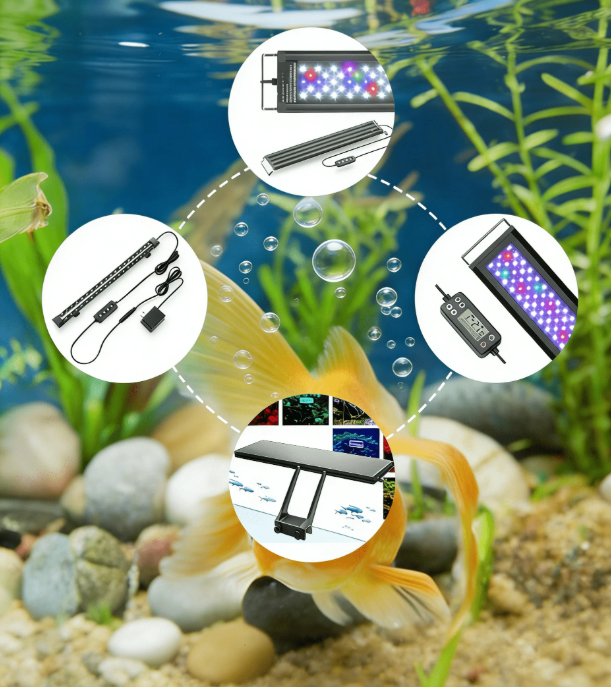
A private-label range may include heaters, smart LED lights, filters, filter media, and accessories. Each category has different development and packaging needs. Decide whether to launch one category first or coordinate several, with a separate MOQ and timeline for each.
HiTauing Supplier describes services covering product selection, requirement discussion, prototype development, testing, mass production, and delivery coordination. Buyers can review the service information and confirm which stages and customization options apply to their selected products.
Prepare the Details Before Requesting a Quote
When comparing aquarium suppliers, assess answer clarity, available documents, sample procedures, and whether the schedule fits the project. Request separate estimates for existing products with custom packaging and products requiring functional changes or new tooling.
A project brief should include target market, sales channel, product type, estimated quantity, packaging needs, compliance questions, and target delivery date. Brands can ask about private label options to clarify available routes before development.
Move Forward With Clear Expectations
Private-label cooperation works better when both sides agree on specifications, samples, packaging, compliance needs, MOQ, and timing before production. Existing products with custom packaging may suit a first launch, while established brands may need a longer ODM project.
For an aquarium supply store, HiTauing Supplier provides aquarium equipment services for business customers. Buyers can ask about private label options. They can also submit their private-label project brief to get tailored MOQ and lead-time information.
