

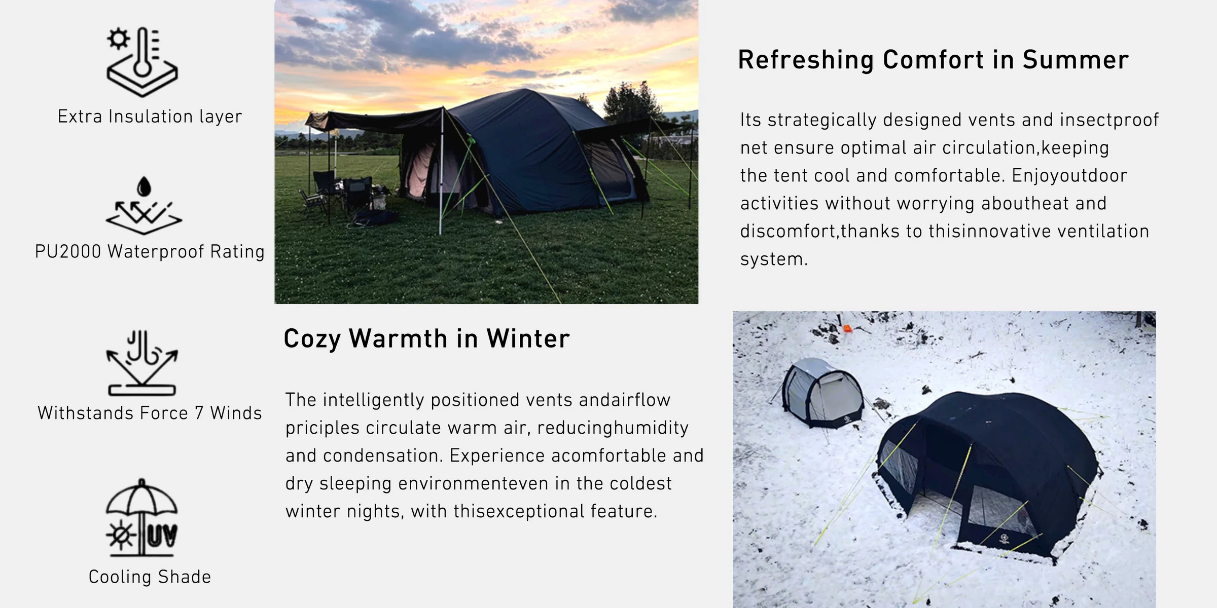
Winter camping creates challenges that are less significant during warmer seasons. Low temperatures, snow, moisture, strong wind, and shorter daylight hours can all affect comfort and safety outdoors. Choosing appropriate equipment can help campers manage these conditions more effectively, especially when shelter design, insulation, ventilation, and weather resistance are considered together.
Building Reliable Shelter for Cold Conditions
Shelter is the first line of protection against winter weather. A suitable tent needs to provide protection from wind, precipitation, and low temperatures while maintaining enough internal space for occupants and essential gear.
High-quality construction can make a meaningful difference. Stronger poles and stable structural designs can help the tent maintain its shape when exposed to snow or strong wind. Durable outer fabrics can also provide protection against moisture and help prevent cold air from entering through weak or poorly sealed areas.
When consumers buy tents online, they should look beyond appearance and compare factors such as construction, season rating, materials, ventilation, packed size, and intended environmental conditions. A winter shelter should be selected according to the actual conditions where it will be used rather than simply its visual design.
Managing Snow and Wind Exposure
Snow adds weight to a tent and can create additional pressure on the structure. Wind can further increase the load, particularly in open areas or exposed mountain environments.
A well-designed shelter should therefore provide a stable frame and effective anchoring options. The shape of the tent also matters. Structures designed to reduce exposed surfaces can help prevent snow from accumulating excessively and may allow wind to move around the shelter more efficiently.
Proper setup is equally important. Even a durable tent can perform poorly if guylines are not tensioned correctly or the structure is positioned on unstable ground. Campers should select a suitable location, clear excessive snow where necessary, and follow the manufacturer’s installation recommendations.
Improving Protection from Moisture
Winter conditions often involve snow, freezing rain, and condensation. Moisture can become a problem when outdoor equipment lacks adequate weather protection or when wet gear is brought directly into an enclosed shelter.
High-quality fabrics with appropriate waterproofing can help reduce external moisture entering the tent. At the same time, ventilation remains necessary because completely sealing the shelter can increase condensation from breathing, cooking, and wet clothing.
This balance is important for winter camping. A suitable shelter should provide protection from precipitation without creating excessive humidity inside. Campers can improve performance by using designated ventilation openings and avoiding unnecessary blockage of airflow.
Drying and storage after each trip are also essential. Packing wet equipment for extended periods can encourage mildew, odors, and material deterioration.
Supporting Better Thermal Management
A tent cannot replace an insulated sleeping system, but its design can influence how efficiently campers manage body heat. A well-constructed shelter can reduce drafts and provide a more controlled environment for sleeping and resting.
Internal organization can also affect comfort. Sleeping areas should be separated from wet equipment where possible, while ventilation openings should remain accessible. Keeping commonly used gear organized reduces the need to repeatedly open doors in cold conditions.
Floor design matters as well. A suitable ground barrier can help reduce contact with frozen or wet surfaces. Campers should still use appropriate sleeping pads and cold-weather sleeping bags because shelter quality works together with, rather than replaces, personal insulation.
Protecting Winter Gear Inside the Tent
Winter camping often requires additional clothing, footwear, cooking equipment, fuel, and emergency supplies. Without enough interior organization, these items can quickly take up valuable space.
Functional camping gear can help create designated areas for different belongings. Storage pockets, vestibules, and larger interior zones can keep essential equipment accessible while preventing sleeping areas from becoming overcrowded.
The broader category of outdoor camping equipment should therefore be evaluated as a system rather than as individual products. Tents, sleeping systems, storage solutions, and accessories all contribute to how efficiently campers manage limited shelter space.
For group trips, this becomes even more important because several people may need to store wet clothing and bulky winter gear in the same shelter.
Making Setup Easier in Difficult Weather
Winter setup can be more demanding than summer camping. Cold temperatures can make handling small components uncomfortable, while snow and frozen ground may complicate anchoring.
A straightforward tent design can reduce the time spent exposed to difficult conditions. Clearly organized poles, simple connection systems, and efficient setup procedures allow campers to establish shelter faster and begin preparing the interior sooner.
Practicing the installation process before a winter trip is useful. Campers can identify which components are most difficult to handle and establish a consistent setup sequence. Familiarity becomes especially valuable when daylight is limited or weather conditions deteriorate unexpectedly.
Choosing Equipment for Repeated Winter Use
For regular winter campers, durability should be considered alongside initial purchase price. Equipment that experiences repeated exposure to moisture, snow, freezing temperatures, and strong wind needs appropriate maintenance to remain functional.
After each trip, tents should be cleaned, dried completely, and inspected for damage. Poles, seams, zippers, guylines, and anchor points should be checked regularly. Any problems should be addressed before the next trip rather than ignored until they become more serious.
Storage conditions also influence long-term performance. Winter equipment should be kept dry and protected from unnecessary compression, heat, and prolonged moisture.
THECATAL approaches outdoor equipment with a focus on practical use and outdoor functionality. For consumers building a winter camping kit, this broader perspective can encourage them to consider durability and usability together.
Balancing Quality, Weight, and Cost
High-quality equipment does not necessarily mean choosing the heaviest or most expensive option. Winter campers still need to consider transportation, especially when hiking to remote sites.
A useful purchasing process compares structural strength, packed weight, weather protection, interior space, and setup requirements. Lightweight materials may make transportation easier, while efficient structural engineering can maintain functionality without adding unnecessary bulk.
Budget should also be considered in relation to expected frequency of use. Someone camping once during mild winter conditions may have different requirements from a frequent mountaineer or outdoor operator facing severe environments.
The goal is to select equipment that matches actual needs rather than paying for features that will rarely be used.
Creating a More Reliable Winter Camping System
Winter camping becomes more manageable when equipment is selected as an integrated system. A well-designed tent can reduce exposure to wind and moisture, provide better organization, and create a more controlled environment for sleeping and daily activities. Campers who combine a suitable shelter with proper insulation, ventilation, maintenance, and site preparation can address many common cold-weather challenges more effectively. Brands such as THECATAL offer valuable insights into how functional outdoor gear enables reliable camping through tough winter weather.
