

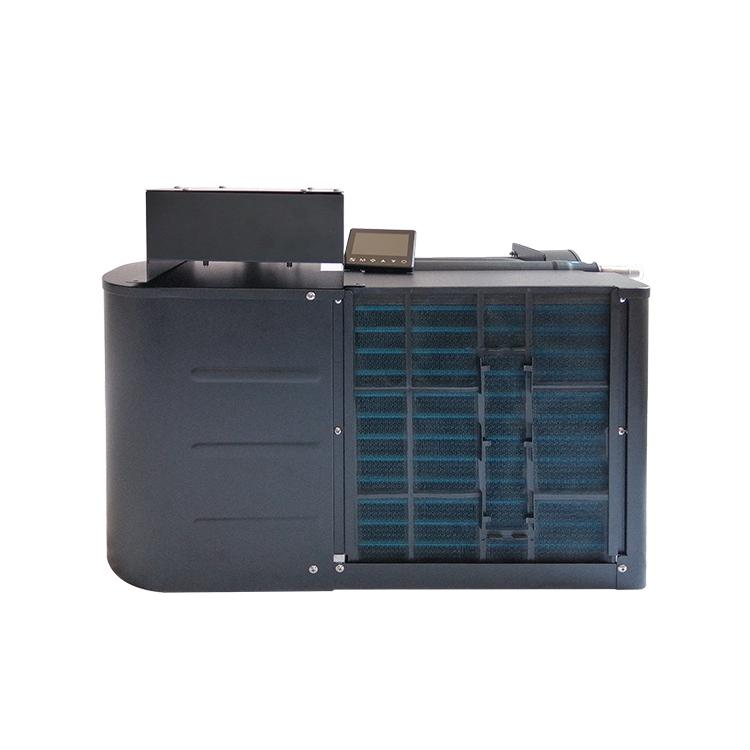
Operating vessels in coastal and open-ocean environments exposes onboard equipment to high humidity, saltwater, continuous vibration, and changing temperatures. Unlike land-based HVAC systems, a marine air conditioner must operate reliably in close proximity to corrosive seawater.
When seawater is used as the cooling medium, internal heat exchangers are exposed to high-salinity water. Poor material selection can increase the risk of pitting corrosion, erosion, and marine fouling. Choosing suitable materials for heat exchangers, structural components, and drainage systems is therefore important for long-term reliability and maintenance costs.
Key Materials That Define Durability in Marine HVAC Design
Traditional marine cooling systems often use cupronickel heat exchangers because of their improved resistance to seawater compared with standard copper. However, they can still be affected by erosion-corrosion, pitting, and bio-fouling under demanding marine conditions.
Full-titanium alloy coaxial condensers provide a stronger option for saltwater applications. Titanium offers high resistance to chloride-related corrosion and helps maintain heat-transfer performance over extended operation. For a marine air conditioner, this material choice can improve durability in high-salinity environments.
Condensation management is another important consideration in marine HVAC design. Evaporators continuously remove moisture from cabin air, creating condensate that must be collected and discharged safely. Poorly protected metal components can corrode when exposed to moisture over long operating periods.
A 304 stainless steel chassis with an integrated drain pan improves durability and corrosion resistance in marine environments. This is particularly useful in compact machinery spaces where condensation and limited ventilation can create challenging operating conditions.
Marine HVAC systems also need protection against water and humidity around electrical components. Salt spray, condensation, and accidental splashing can affect control boards, sensors, and other electronic parts if they are not adequately protected.
Water-resistant enclosure designs and splash protection help reduce the risk of moisture-related electrical problems. For equipment installed in tight or exposed areas, appropriate ingress protection is an important part of overall system reliability.
Seawater Exposure and Component Protection
Corrosion resistance is not determined by the heat exchanger material alone. The seawater circuit may include hoses, fittings, pumps, valves, and connection points that are also exposed to saltwater. Differences between metals can create galvanic corrosion when dissimilar materials are placed in an electrically conductive seawater environment. For marine HVAC equipment, compatible materials and appropriate connection methods therefore need to be considered across the entire seawater circuit rather than focusing only on the condenser.
Installation conditions can also influence corrosion risk. Equipment placed in bilge areas or other enclosed compartments may be exposed to persistent humidity, condensation, and limited airflow. Salt deposits can accumulate around connections and drainage points over time, particularly when seawater enters the equipment area through splashing or maintenance activities. Proper drainage, ventilation, and protection around electrical connections can help reduce these environmental stresses.
Why Material Selection Matters for Marine Equipment Buyers
For distributors, yacht builders, and vessel operators, material specifications are useful when comparing marine HVAC equipment for different operating environments. A system intended for occasional coastal use may face different conditions from one operating regularly in offshore or high-salinity waters. Buyers should therefore review the materials used in seawater-contact components, the protection of electrical parts, drainage design, and the accessibility of components that require inspection.
Corrosion-resistant construction can also affect the long-term service process. Components that withstand moisture and saltwater exposure more effectively may require fewer corrosion-related interventions during normal maintenance, while accessible layouts can make inspection and servicing more practical. Evaluating these factors alongside cooling capacity, power supply, installation dimensions, and warranty support provides a more complete basis for selecting marine HVAC equipment.
Modern Energy Architectures and Inverter Technology
As vessels increasingly use battery banks, lithium storage systems, and solar power, HVAC equipment must also work efficiently with different onboard power architectures. Fixed-speed compressors can create high starting currents that place additional demands on generators, inverters, and circuit protection.
Variable-frequency inverter technology reduces this issue by gradually increasing compressor speed during startup and adjusting output according to the cooling load. Marine HVAC systems can be configured for AC 110V/220V or DC 12V/24V/48V power systems, providing greater flexibility for different vessel designs. Lower starting demand can also make battery-powered operation more practical when generators are not running.
Featured Product Solution: Integrated Inverter Marine Air Conditioners
For commercial vessel operators, yacht builders, distributors, and other marine equipment buyers, integrated inverter marine air conditioners provide compact heating and cooling for demanding onboard environments. ZhuoliMarine’s systems cover cooling capacities from 9,000 BTU to 25,000 BTU and support AC 110V/220V as well as DC 12V/24V/48V configurations.
The units combine variable-frequency inverter technology with a full-titanium alloy coaxial condenser and 304 stainless steel chassis with an integrated drain pan. Their compact construction allows installation in areas such as bilge compartments, under-seat lockers, and other space-limited locations. Wi-Fi app control supports convenient remote temperature adjustment, while low-noise operation and water-resistant protection suit the requirements of marine applications.
Partnering with ZhuoliMarine for Marine Climate Control
As a specialized marine HVAC manufacturer, ZhuoliMarine supplies inverter climate control systems for small-to-medium vessels, commercial craft, yachts, and international distribution partners. Its product range combines corrosion-resistant materials, variable-frequency operation, and multiple voltage options to meet different marine installation requirements.
For upcoming vessel projects or distribution needs, contact the ZhuoliMarine technical sales team to discuss suitable marine air conditioning solutions.
