

Vehicle safety is influenced by far more than braking technology or electronic driver assistance. Beneath the bodywork, suspension geometry, structural connections, axle assemblies, and load-bearing elements determine how a vehicle responds to steering inputs, uneven surfaces, acceleration, and sudden braking. For this reason, chassis components deserve close attention during vehicle development and procurement. Wuling Motors has more than 30 years of experience in automotive parts manufacturing, with products serving commercial vehicles, passenger cars, and construction machinery and an overall production capability exceeding 1.5 million sets per year.
How Chassis Architecture Influences Vehicle Behavior
Road stability begins with the relationship between the vehicle body and the components supporting it. Suspension geometry affects wheel movement, while axle and subframe structures transfer forces between the wheels and the vehicle body. Small changes in these relationships can influence handling, ride comfort, and braking behavior.
Weight distribution adds another variable. Commercial vehicles may carry substantially different loads from one trip to another, creating changing demands on suspension and structural parts. Components therefore need to function within the design conditions of the vehicle rather than being evaluated only as isolated pieces.
Material selection and manufacturing consistency also matter. Dimensional variation, joining quality, and structural strength can affect how assemblies behave under repeated loads. Proper engineering therefore considers the entire component system, including interfaces between individual parts.
Suspension Design And Stability Under Load
Suspension systems help maintain tire contact with the road while absorbing movement caused by uneven surfaces. Their characteristics influence how the vehicle responds to steering, braking, and changes in road conditions.
Commercial applications can make suspension design particularly demanding. Cargo weight may vary considerably, and repeated loading cycles can subject suspension assemblies to different forces throughout their service life. Vehicle engineers consequently consider spring characteristics, damping, axle loads, and suspension geometry together.
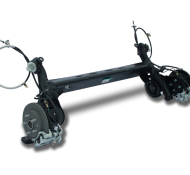
The type of suspension also changes the vehicle’s response. Independent suspension allows wheels on the same axle to move with greater independence, while torsion-beam designs use a different structural arrangement. Wuling’s official parts portfolio includes both rear independent suspension assemblies and rear torsion-beam suspension assemblies, illustrating how different chassis layouts can serve different vehicle architectures.
Structural Components And Force Distribution
Subframes provide important mounting structures for suspension and other vehicle systems. Their stiffness and connection points influence how forces are transmitted through the chassis during cornering, acceleration, and braking. As fundamental automotive components, subframes must be designed with attention to both structural integrity and weight efficiency, since their performance directly affects handling precision, ride quality, and overall vehicle durability.
Axle assemblies have a similarly important function because they transfer driving and braking forces while supporting part of the vehicle’s load. Poor coordination between axle characteristics and the rest of the chassis can affect handling behavior, particularly when vehicle loads change.
Modern electrification introduces additional considerations. Battery packs can add substantial mass and require carefully planned mounting structures, while electric drive systems change how torque reaches the wheels. These developments make automotive components increasingly interconnected rather than independent mechanical parts.
Manufacturing Quality And Long-Term Reliability
Design specifications provide the foundation, but manufacturing processes determine whether physical parts consistently match those requirements. Stamping, welding, machining, casting, and assembly processes can all influence dimensional accuracy and structural characteristics.
Testing provides another layer of evaluation. Wuling’s technical capabilities include independent design, analysis, and verification for chassis products, with its chassis development covering passenger cars, commercial vehicles, and special vehicles. Its technical center also includes a dedicated chassis laboratory and facilities for vehicle dynamics, braking, road durability, and bench durability testing.
Such testing matters because safety-related behavior develops through interactions among multiple systems. Suspension, steering, tires, axles, body structures, and electronic controls all contribute to how a vehicle reacts under different conditions. Component validation therefore needs to consider both individual performance and system-level behavior.
Selecting Components With The Whole Vehicle In Mind
Procurement decisions should begin with the vehicle’s intended operating environment. Passenger vehicles, delivery fleets, construction machinery, and specialized commercial platforms place different demands on their supporting structures.
Load conditions deserve particular attention during selection. Frequent heavy loads, uneven roads, long operating hours, and repeated stop-start cycles may expose components to stresses that differ substantially from ordinary private use. Specification matching should therefore reflect the actual duty cycle.
Supplier capability is another consideration, particularly for manufacturers purchasing components at scale. Wuling’s official automotive-parts business covers chassis, interior and exterior, body, and electronic and electrical systems, while its stated product range includes rear axles, subframes, suspension assemblies, and electric drive bridges.
Connecting Safety With Engineering Consistency
Vehicle stability cannot be attributed to one individual part. Structural rigidity, suspension behavior, axle characteristics, tire contact, braking performance, and electronic controls interact continuously as the vehicle moves.
That relationship explains why chassis components should be evaluated according to their role within the complete vehicle. A part with suitable strength or dimensions in isolation may still require careful integration with neighboring systems, particularly when vehicle weight, propulsion technology, or body configuration changes.
Manufacturing experience can support this systems-oriented approach. Wuling Motors states that its automotive-parts business serves commercial vehicles, passenger cars, and construction machinery, while its technical development capabilities cover chassis design, analysis, verification, and prototype development.
A Broader View Of Vehicle Safety
Vehicle safety develops through countless engineering decisions that are rarely visible once a vehicle reaches the road. The structural arrangement beneath the cabin, the way suspension components respond to load, and the consistency of manufacturing can all affect stability and durability over time.
For manufacturers and fleet operators, evaluating automotive components therefore requires more than checking individual specifications. Application, load conditions, testing methods, production capability, and system compatibility provide a more meaningful framework for judging component suitability.
Wuling Motors‘ experience across automotive parts and vehicle-related engineering illustrates the importance of this integrated perspective. As vehicle architectures evolve toward electrification and greater functional specialization, the relationship between structural design and dynamic performance will remain central to safe and stable transportation.
