

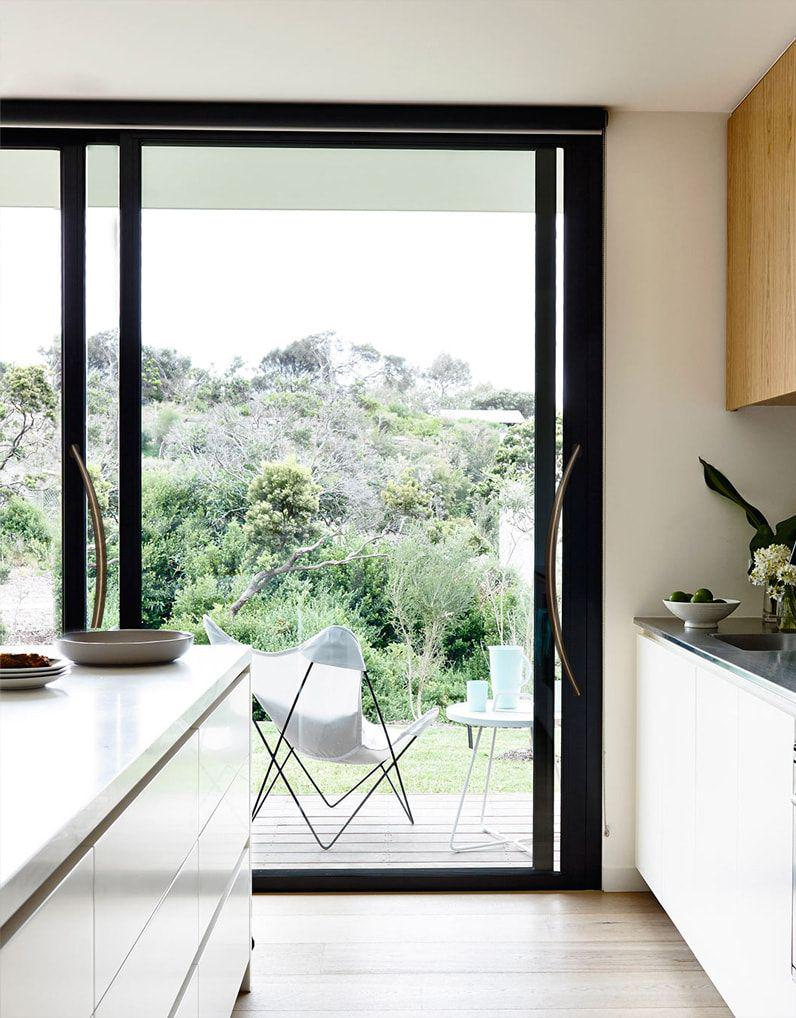
Patio doors function as the primary architectural interface between interior conditioned space and exterior environments. Consequently, their hardware must simultaneously manage the structural load of oversized glazing panels, provide effortless daily operation for occupants, and maintain a continuous weather barrier against wind-driven rain and thermal loss. These demands must be met under conditions of near-continuous exposure to ultraviolet radiation, temperature cycling, and airborne debris.
To solve these performance challenges, CMECH engineers a comprehensive gliding door hardware solution portfolio, with standard sliding configurations available in variants rated to 300 kg and lift‑and‑slide systems supporting up to 450 kg in their highest‑spec options. Featuring 304 stainless steel load‑bearing brackets, rubber‑coated rollers validated beyond 120,000 cycles, and integrated handle‑lock assemblies, this patio door hardware ecosystem coordinates sealing performance, security, and user ergonomics for outdoor‑opening assemblies when paired with compliant profile fabrication.
Load Capacity and Roller Engineering for Oversized Glazing Panels
Contemporary patio openings routinely accommodate sash widths from 500 mm to 3,000 mm alongside double- or triple-glazed panels. These large setups concentrate several hundred kilograms onto a minimal set of rolling contacts. The roller assembly must translate this heavy dead-load into smooth horizontal motion while actively resisting the lateral thrust generated by wind pressure acting on a large glass surface.
To handle these structural forces, CMECH sliding door rollers employ a premium 304 stainless steel bracket with a triple‑layer adjustable design that distributes weight evenly across the contact surface. Meanwhile, the rubber‑coated wheel structure is validated beyond 120,000 open‑and‑close cycles with minimal wear and noise escalation. Available in variants with load capacities extending up to 300 kg, this sliding door hardware solution helps mitigate sagging, binding, and track grooving‑related defects commonly triggered by underspecified rollers after initial installation.
Track Geometry and Threshold Drainage for Exterior Exposure
The floor-level track of an exterior opening is uniquely vulnerable to water infiltration, particulate accumulation, and freeze-thaw cycling. Situated at the lowest point of the frame, the threshold receives direct runoff from the large glazed panel above. Without integrated drainage channels and debris-resistant track profiles, the roller path quickly becomes a maintenance liability that compromises both sliding operation and weatherproofing.
CMECH lift-and-slide configurations address this vulnerability through a 180-degree handle rotation that elevates the sash before horizontal movement begins. This lifting action releases the seal from the threshold and reduces the frictional drag that would otherwise grind dirt and moisture into the track surface. Supporting sash widths from 720 mm to 3,300 mm and heights from 1,800 mm to 2,700 mm when paired with compliant profiles and correct hardware configuration, this system enables even large patio door hardware solutions to maintain controlled movement without sacrificing threshold performance.
Handle and Lock Integration: Ergonomics Meets Forced-Entry Resistance
Handles for exterior openings must balance one-handed operational ease for occupants carrying items through the doorway with the structural requirement that the lock resist pry-bar attack and forced lift-off from the outside. On oversized panels, handle torque must also generate sufficient leverage to compress perimeter seals without introducing excessive resistance that might discourage users from fully latching the door.
To address this trade‑off between ergonomics and security, CMECH offers the Red Dot Award‑winning Metro Series handle. This component integrates handle and lock functions into a 30 mm ultra‑slim unit equipped with a linear ball‑bearing mechanism tested beyond 100,000 cycles. Alternatively, the Recessed Handle with T‑Drive utilizes a patented ball‑bearing locking mechanism engineered to resist prying forces exceeding 100 N. Validated through a 30,000‑cycle durability test, this specialized patio‑door handle configuration provides anti‑prying performance within a flush, snag‑free profile that preserves clear passage width.
Sealing Technology: Controlled Compression for Sliding Apertures
A fundamental paradox of patio door weatherproofing involves enabling a panel to translate horizontally while maintaining a continuous air and water barrier around its perimeter. Standard gliding mechanisms address this mechanical conflict through multi-channel gasket architectures. In contrast, heavy-duty lift-and-slide systems resolve this challenge by vertically compressing the seal before the locking points engage.
In a CMECH lift-and-slide configuration, the hardware lowers the sash onto the threshold gasket once the panel reaches its closed position. This controlled motion generates uniform compression along the full sill length, effectively eliminating the bypass channels that form when sliding seals are dragged across tracks. The resulting airtightness and water resistance make this sliding door hardware solution’s design a reliable specification for coastal and high-wind environments where wind-driven rain threatens the threshold junction.
Corrosion Resistance and Material Grade Selection for Outdoor Duty
Exterior hardware solution operates in a demanding environmental exposure category. Direct rainfall, salt crystallization in coastal regions, and intense ultraviolet radiation can attack unprotected metals and polymers at accelerated rates. Over time, these aggressive elements risk converting smooth rolling operation into corrosion-induced seizure if low-grade materials are specified.
To ensure long-term durability in harsh environments, CMECH selects high-grade materials across its patio-door hardware solutions. Load-bearing brackets and key structural linkages rely on 304 stainless steel, which offers inherent resistance to chloride-induced pitting and atmospheric degradation. Synthetic components, such as roller coatings and seal gaskets, are formulated to resist UV breakdown and thermal degradation, preserving smooth sliding dynamics and structural integrity across changing seasons.
Installation Adjustability and Long-Term Serviceability
Large glazed panels tend to amplify minor installation or framing errors into notable operational defects. Sub-floor settlement, structural deflection, or frame tolerance variations can misalign locking points and cause uneven seal compression over time. Without built-in adjustability, correcting these shifts often requires labor-intensive panel removal or glass disassembly.
The CMECH triple-layer adjustable roller bracket resolves this field challenge by providing straightforward height and level calibration. Field technicians can fine-tune sash alignment and seal compression directly on site without removing the heavy glass sash from its frame. This integrated adjustability compensates for threshold settlement and installation variances, streamlining initial handover and ensuring long-term serviceability across the lifecycle of the installation.
Specifying the Right Configuration: Standard Glide Versus Lift-and-Slide
Selecting between standard sliding and lift-and-slide architectures depends primarily on panel weight, opening dimensions, and target performance criteria. Standard sliding door hardware solution suits routine residential applications featuring moderate sash weights and standard dimensions. Conversely, lift-and-slide hardware solution is highly recommended for panel weights above 200 kg or for projects requiring strict acoustic, thermal, and weather‑sealing standards.
CMECH delivers both mechanical platforms within a unified product ecosystem. This integrated approach allows architects and specifiers to maintain consistent handle designs, finishes, and visual aesthetics throughout a building. Whether an opening specifies a standard gliding framework or a heavy-duty lift-and-slide system, the resulting facade achieves visual harmony alongside tailored mechanical performance.
All hardware specifications, performance data and material parameters are sourced from CMECH official product manuals and certified test reports.
