

Starting an electric motor does not always require a complex control system. For many applications, Direct-On-Line (DOL) starting remains a practical solution because of its straightforward design, simple operation, and relatively easy maintenance. When the motor, power supply, and application conditions are suitable, a properly selected DOL starter can provide dependable motor control without unnecessary complexity.
For engineers, equipment manufacturers, contractors, and system operators, the key question is not whether DOL starting is the most advanced method, but whether it is appropriate for the actual operating conditions. This is where properly selected electrical control products become important.
What Is Direct-On-Line Motor Starting?
Direct-On-Line starting connects a motor directly to the power supply through a control and protection circuit. When the start command is given, the contactor closes and allows the motor to receive the available line voltage. The motor then accelerates directly to its operating speed.
A typical DOL arrangement combines a control contactor with an overload protection device. Depending on the system design, additional circuit protection, control switches, and auxiliary contacts may also be included.
The main advantage of this configuration is its simplicity. There are fewer control components, fewer wiring connections, and fewer parameters to configure compared with reduced-voltage starting methods. This can make installation, troubleshooting, and routine maintenance more straightforward.
When Is DOL Starting a Suitable Choice?
The suitability of DOL starting depends primarily on motor characteristics and the surrounding electrical system. Small and medium-sized motors are often suitable when their starting current can be accommodated by the power supply and when the mechanical load does not require controlled acceleration.
DOL starting can be particularly practical for applications such as pumps, fans, compressors, conveyors, and general machinery where a straightforward start and stop function is sufficient.
However, direct starting can produce a relatively high inrush current. If several large motors start simultaneously, or if the electrical network has limited capacity, this current may cause noticeable voltage fluctuations. The mechanical impact of rapid acceleration should also be considered for equipment with sensitive loads.
Therefore, selecting a starting method should begin with the motor’s rated power, starting characteristics, load requirements, and available supply capacity rather than simply choosing the simplest circuit.
The Role of a Low Voltage Contactor
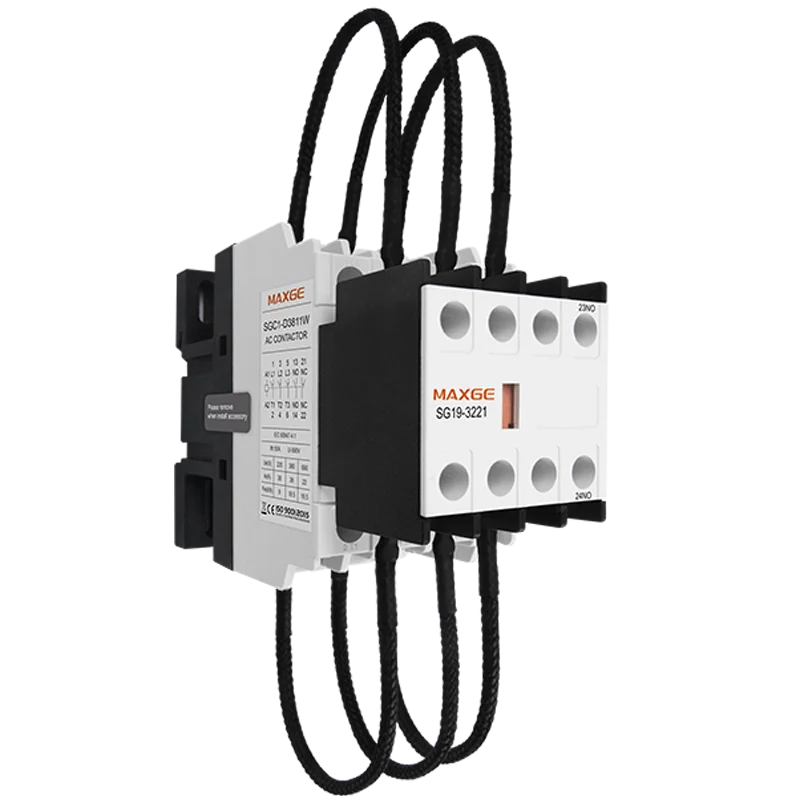
The contactor is a central component in a DOL motor starter. A low voltage contactor allows the motor circuit to be switched through an electrically controlled mechanism, making remote start and stop operation possible.
For industrial electrical equipment, the contactor needs to be selected according to the motor’s operating current, voltage, utilization category, switching frequency, and application environment. The appropriate electrical ratings are essential because the contactor repeatedly connects and disconnects the motor circuit during normal operation.
MAXGE offers AC contactors within its industrial device range, alongside related accessories and motor control products. Its product portfolio includes contactors designed for motor control applications, providing options for different equipment configurations.
Why Overload Protection Matters
A contactor controls the motor but does not by itself provide complete motor overload protection. For this reason, a thermal overload relay is commonly integrated into a DOL starter.
A thermal overload relay 3-phase monitors the current flowing through the motor and responds to sustained overload conditions or phase imbalance. When an abnormal condition continues long enough to create a risk of excessive heating, the relay can initiate a trip and interrupt the control circuit.
MAXGE’s SGR2-D thermal relay series is designed for protection against sustained overload currents and phase imbalance. The series uses thermal sensing and a tripping mechanism, and its products can be mounted directly under compatible contactors. The SGR2-D series also uses Class 10A tripping characteristics and provides different current-setting ranges.
Correct coordination between the contactor and thermal overload relay is therefore an important part of DOL starter selection. The relay setting should correspond with the motor’s rated current and the applicable protection requirements rather than being selected solely according to physical size.
DOL Starting in Industrial Electrical Equipment
For manufacturers and users of industrial electrical equipment, simplicity can have practical value. A DOL starter can reduce the number of components required in a motor control circuit while maintaining essential start, stop, and overload protection functions.
This can also simplify spare-parts management and maintenance. When a system uses standardized contactors, overload relays, and compatible accessories, technicians can more easily identify components and diagnose common operating problems.
At the same time, DOL starting should not be treated as a universal solution. Applications involving high-power motors, weak electrical networks, frequent starting, or strict requirements for reduced mechanical stress may require alternatives such as star-delta starting, soft starters, or variable frequency drives.
The right approach is to match the starting method with the actual motor and application rather than adding complexity where it does not provide a practical benefit.
Choosing Electrical Control Products for a DOL System
When evaluating electrical control products for motor starting, compatibility should be considered alongside individual product specifications. The contactor, thermal overload relay, control circuit, and protective devices should work together as part of a coordinated system.
It is also important to review rated voltage, motor current, utilization category, frequency of operation, ambient conditions, installation method, and relevant standards. These factors can affect both equipment selection and long-term operating reliability.
A product supplier with a broader industrial control portfolio can also make system selection more convenient. MAXGE provides industrial devices covering AC contactors, thermal relays, magnetic starters, motor protecting circuit breakers, control switches, and related components.
A Straightforward Method When the Application Allows It
Direct-On-Line starting continues to make sense when the motor and electrical system can accommodate its starting characteristics. Its simple circuit architecture, direct motor connection, and relatively straightforward maintenance make it a practical option for many conventional motor applications. Before selecting this method, however, engineers should consider motor starting current, available supply capacity, mechanical load, starting frequency, and the impact of voltage fluctuations on the wider electrical system.
The control and protection devices should also be selected as a coordinated combination rather than individually. A suitable low-voltage contactor can handle the motor’s switching requirements, while a properly rated thermal overload relay can provide protection against sustained overload conditions. Circuit protection and control components should also be matched to the motor’s rated current, operating environment, and maintenance requirements.
MAXGE develops electrical control solutions for industrial applications, supporting motor switching, overload protection, power distribution, and equipment control. Its low-voltage portfolio also extends to applications such as PV, energy storage, and EV charging, providing a broader range of electrical protection and control solutions for different operating environments.
For product specifications, technical information, or assistance with selecting suitable industrial electrical equipment, you can explore MAXGE’s product range or contact MAXGE to discuss your application requirements.
