

Expanding commercial electric vehicle fleets introduces distinct financial considerations for logistics operators, property developers, and charge point network managers. Transitioning away from internal combustion engines requires a strategic evaluation of both capital expenditures (CAPEX) and operational expenditures (OPEX) to maintain healthy profit margins.
Establishing a robust infrastructure involves more than selecting high-capacity hardware; it demands a comprehensive analysis of site preparation, long-term maintenance, and hardware efficiency. In this specialized sector, INFORE ENVIRO operates as a dedicated manufacturing partner for B2B enterprises, providing custom equipment designed to streamline these financial variables.
With a ten-year track record in the new energy space, the company delivers targeted solutions that help fleet managers optimize their total cost of ownership from the initial ground-breaking to daily energy delivery.
Optimizing CAPEX with a Dual Port EV Charger
The initial phase of network deployment heavily revolves around capital expenditures, which include the raw cost of charging hardware, site excavation, grid upgrades, and physical labor.
When planning a commercial layout, opting for multi-output hardware fundamentally alters the financial equation. Deploying a dual port EV charger allows site developers to serve two vehicles simultaneously from a single physical footprint.
This configuration inherently reduces the amount of trenching required for electrical conduit and minimizes the number of concrete pedestals needed across a sprawling parking facility. Consolidating the hardware footprint allows businesses to scale their charging capacity without proportionately inflating their baseline construction budgets.
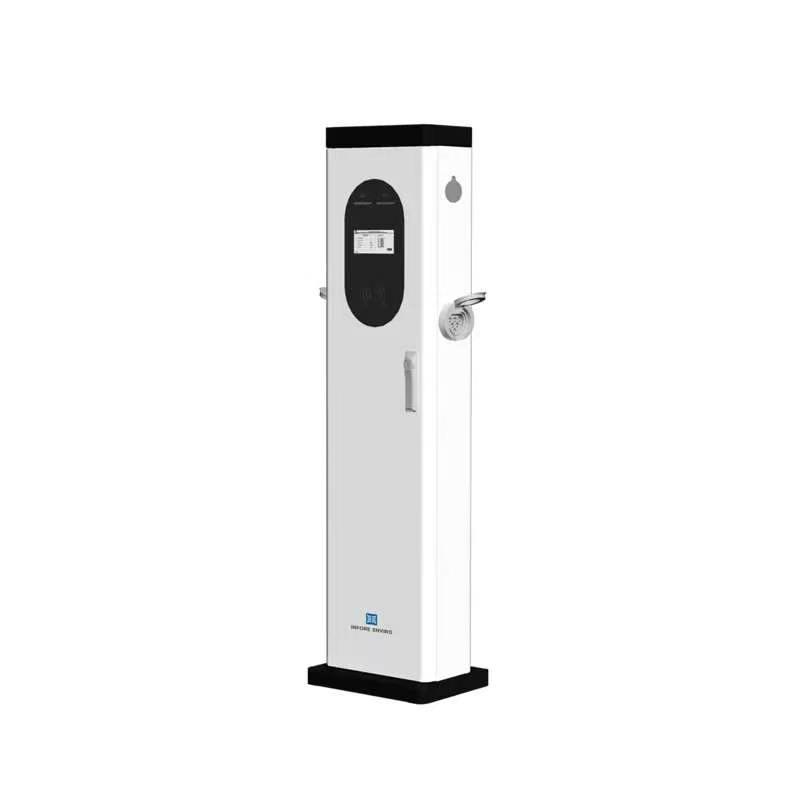
By offering 14kW/42kW Carina series Commercial Floor-mounted, the manufacturer supports highly tailored energy deployment strategies. The commercial AC series features two Type 2 connectors alongside an intuitive 5-inch touchscreen interface, giving fleet operators the flexibility to configure 7kW or 22kW simultaneous outputs based on specific vehicle battery requirements.
Through continuous in-house development and self-manufacturing capabilities, the brand delivers custom projects characterized by high power conversion efficiency. For B2B clients looking to maintain network consistency, dedicated OEM and ODM services provide customized aesthetic designs and targeted internal software configurations.
Supported by an expansive 12,000-square-meter factory footprint, the production line sustains a reliable manufacturing lead time of 30 to 45 days. This predictability assists project managers in keeping aggressive deployment schedules firmly on track.
Navigating Compliance and Environmental Durability
Beyond raw hardware acquisition, CAPEX calculations must account for regulatory compliance and environmental hardening. Replacing non-compliant or failed equipment quickly degrades overall project viability.
Products aimed at international deployment demand rigorous manufacturing certification. The supplied equipment complies with Chinese national standards (GB/T) and holds 3C certification. Furthermore, systems maintain strict compatibility with European standards, including CE, CB, and RoHS validations, confirming material safety and operational reliability across diverse regulatory environments.
Commercial units frequently face continuous exposure to harsh weather conditions, whether situated in open-air logistics hubs, industrial parks, or public transit depots. Addressing these environmental stressors requires robust physical protection built into the chassis.
The commercial AC charging series features an IP54 protection grade, providing substantial defense against dust ingress and water spray. Integrated comprehensive safety protocols—including safeguards against over-voltage, under-voltage, short-circuits, overloads, and earth faults—add further operational stability.
By deploying highly durable hardware from the outset, site operators minimize the likelihood of premature degradation, protecting their initial capital investment over an extended operational lifespan.
Managing OPEX via Intelligent Software Integration
Once the physical infrastructure becomes active, the financial focus shifts directly to operational expenditures. OPEX encompasses rolling electricity costs, routine maintenance checkups, network management fees, and emergency repair dispatches.
To keep these recurring expenses manageable, software interoperability remains a crucial factor. The hardware supports the standard OCPP protocol, facilitating compatible connection to third-party management platforms.
This integration allows network operators to implement intelligent charging schedules and dynamic load balancing. By actively controlling energy flow, facility managers can avoid peak utility rates while distributing available power efficiently across multiple active charging ports, notably reducing monthly grid expenses.
Advanced connectivity features further limit operational overhead. Equipped with 4G, WIFI, Bluetooth, and Ethernet networking capabilities, the system allows technicians to perform remote diagnostics and over-the-air firmware upgrades.
Reducing the need to dispatch physical maintenance crews for minor software anomalies significantly lowers monthly operating costs. Operators gain real-time visibility into machine status and user behavior, helping them maintain a leaner, more efficient remote service model that responds dynamically to daily usage patterns.
Sustaining Asset Value with a Reliable dual EV charging station
Sustained long-term profitability relies on maintaining exceptional daily uptime. In the commercial transportation sector, a non-functional charging unit directly disrupts vehicle dispatch schedules and negatively impacts overall revenue generation.
Selecting hardware backed by robust after-sales support acts as a critical financial safeguard. To mitigate unexpected repair costs, the manufacturer provides a comprehensive 2-year warranty across its product line.
This coverage offers enterprise buyers a highly predictable financial outlook regarding potential component replacements, shielding them from sudden operational outlays.
Furthermore, access to a dedicated 7×24-hour support framework staffed by after-sales specialists proves vital for logistics operations running continuous day-and-night cycles.
When a dual EV charging station experiences an unexpected technical anomaly, efficient assistance minimizes costly fleet downtime. Transitioning a commercial property to support widespread electric transportation involves meticulous long-term financial planning.
By integrating highly efficient, multi-output hardware, leveraging scalable remote management software, and securing robust factory-level support, forward-thinking B2B operators position themselves to effectively control upfront expenditures while continuously optimizing ongoing operational costs.
