

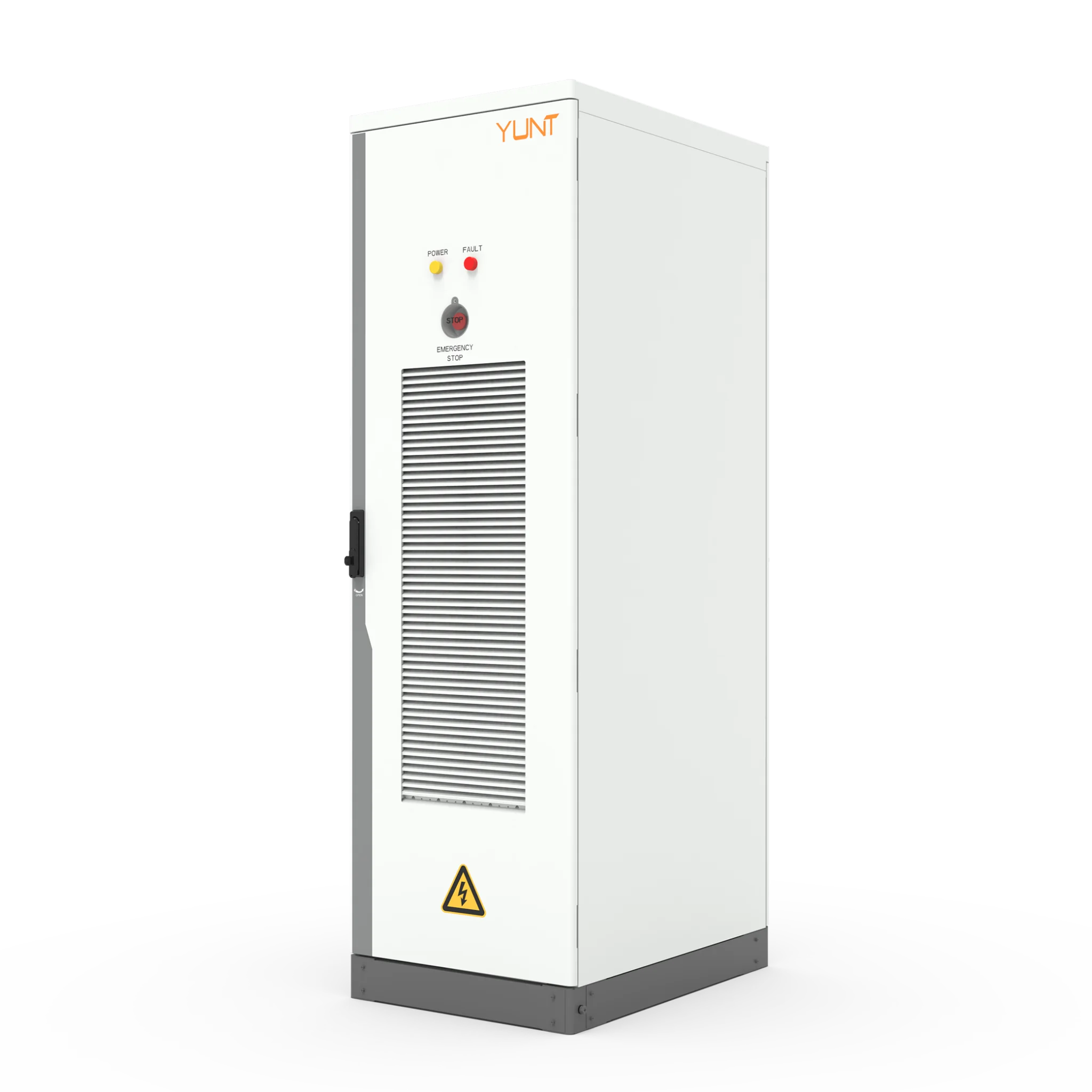
Commercial and industrial (C&I) solar assets demand high-efficiency power conversion hardware capable of operating continuously in demanding physical environments. In DC-coupled microgrids, overall power transfer efficiency depends heavily on semiconductor thermal performance, dynamic tracking capability, and dynamic protection. Traditional silicon conversion stages suffer from severe thermal bottlenecks and high switching losses, forcing current derating during peak irradiance hours. Modern hardware solves this by incorporating third-generation silicon carbide (SiC-MOS) power semiconductors. Featuring wide bandgap properties and superior thermal conductivity, advanced conversion systems engineered by YUNT operate at elevated switching frequencies with minimal energy loss, pushing conversion efficiencies up to 99.2%.
Effective thermal extraction requires specialized physical enclosure architecture to safeguard delicate control logic. Spherically isolated cooling channels separate heat-generating inductors and power switches from central logic boards, preventing industrial dust, humidity, and atmospheric pollutants from settling across sensitive electronics. Variable-speed intelligent fan arrays dynamically modulate internal airflow based on real-time temperature sensor telemetry. This dynamic cooling framework maintains stable conversion across broad operating temperature spans from -25°C to 60°C while preventing premature bearing degradation in challenging outdoor industrial environments.
Evaluating Engineering Capabilities of MPPT Solar Charge Controller Manufacturers
Ensuring continuous site uptime requires multi-layered electrical protection that helps mitigate the effects of grid transients, sudden lightning strikes, and short circuits before downstream infrastructure sustains damage. Large-scale commercial solar arrays collect substantial electromagnetic interference during severe weather. Integrated Type II Surge Protection Devices (SPD) on both PV array inputs and DC outputs safely divert high-voltage spikes to ground. Complementary physical protection layers include DC reverse polarity isolation, heavy-duty output fuses, automatic insulation monitoring, overvoltage category II isolation, and real-time overtemperature shutdown protocols.
Maximum Power Point Tracking algorithms must react dynamically to shifting solar irradiance caused by rapid cloud cover, atmospheric haze, or structural shading. Standard tracking algorithms risk getting trapped in local power minima, severely reducing cumulative daily generation. High-precision digital signal processors continuously scan wide DC input voltage ranges from 150V to 1000V, locating the true global maximum power point in real time.
When auditing tier-one MPPT solar charge controller manufacturers, project developers prioritize multi-channel tracking flexibility. Equipping an industrial cabinet system with four independent tracking channels per module enables flexible multi-directional solar string configurations, effectively helping reduce mismatch losses across asymmetrical arrays. Dynamic point tracking ensures connected lithium battery clusters receive optimized charging currents across full-load output ranges of 600V to 950V, while supporting stable power delivery and reducing the risk of power cycling or micro-voltage fluctuations.
Rapid Solid-State Transfer Topology for Critical Industrial Infrastructure
Modern industrial processing plants, continuous manufacturing lines, automated logistics hubs, and international airport terminals host sensitive electronic infrastructure where unexpected power interruptions threaten critical operations. Automated check-in systems, baggage handling conveyor drives, air traffic communication networks, and programmable logic controllers require rapid power switching between primary utility feeds, localized battery storage, and emergency standby generators. Mechanical automatic transfer switches with multi-second transition delays allow DC bus capacitors to discharge and control servers to reboot, causing costly operational disruption.
Solid-state switching topology utilizes high-power silicon-controlled rectifiers to monitor line voltage waveforms, frequency alignment, and phase displacement continuously across incoming utility paths. Upon detecting an incoming voltage anomaly or full utility blackout, electronic switching circuits transfer critical electrical loads between power sources in under 10 milliseconds. Sub-10-millisecond switching maintains full phase synchronization without introducing transient voltage spikes to downstream equipment. Non-isolated power semiconductor architectures achieve peak conversion efficiencies reaching 99.50% under full load. Integrating high-speed static transfer switches within dual-bypass cabinet structures provides dual-layer power resilience, supporting a rapid transition with minimal power interruption to battery power before supporting coordinating diesel generator synchronization.
Modular Redundancy, System Integration, and Global Compliance
Engineering procurement teams prioritize modular hardware redundancy and scalable layout configurations when auditing specialized power equipment manufacturers. Modular microgrid cabinet systems integrate standardized hot-swappable power modules that allow project developers to scale overall power capacity from 120 kW up to 360 kW within a uniform cabinet footprint.
Modular power distribution ensures maximum operational availability through inherent fault tolerance. Each power channel operates with independent output circuit breaker protection; if an individual module experiences a localized fault, adjacent power modules maintain continuous plant operation without causing a total facility shutdown. Dedicated output isolation circuit breakers allow field engineers to inspect or replace individual module hardware safely without de-energizing the main DC bus bar.
Integrating power equipment into overarching facility automation platforms requires flexible digital communication interfaces. Industrial charge management units and switching cabinets feature isolated RS485, CAN, Ethernet, and digital I/O buses. These communication links transmit real-time telemetry—including line phase voltages, load waveforms, thermal logs, and fault alarms—to central Battery Management Systems (BMS) and cloud-hosted Energy Management System (EMS) software platforms.
Strategic Value for Commercial Energy Assets
Adherence to international electrical safety and electromagnetic compatibility standards validates long-term operational reliability. YUNT’s certified power hardware holding global qualifications—including EU CE, Germany VDE, TÜV, SGS, and IEC 61439 standards—simplifies utility grid connection approvals and speeds up commissioning across international markets. Remote Over-The-Air (OTA) firmware capabilities allow administrators to deploy enhanced control algorithms continuously throughout long-term asset lifecycles. Sourcing standardized, modular power equipment centered on a high-efficiency MPPT solar charge controller ensures maximum system uptime, robust physical protection, and optimized financial returns for commercial energy storage investments.
