

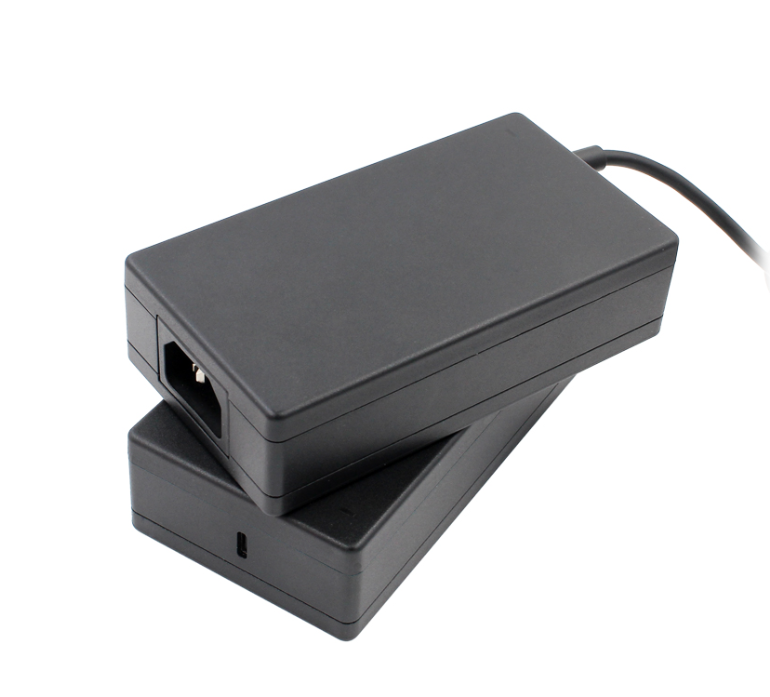
Medical devices are becoming smaller, more portable, and more connected, creating new challenges for power system design. An adapter now needs to provide stable power while also addressing electrical isolation, electromagnetic compatibility, thermal performance, efficiency, and interface flexibility. These requirements are encouraging manufacturers to develop new circuit architectures and power components for professional applications. The latest adapter tech medical power supply solutions reflect this shift by combining compact construction with safety and functional flexibility.
From Basic Power Conversion to Application-Focused Design
Traditional adapters were mainly evaluated by output voltage, rated power, and basic safety protection. Medical equipment requires a broader evaluation because power quality can affect the operation of sensitive electronic circuits. Modern designs therefore combine power conversion with protection, isolation, filtering, and thermal control in a more coordinated way.
High-frequency switching technology is one area contributing to this development. By improving switching performance and circuit integration, engineers can reduce the size of magnetic components and other internal parts. This makes it easier to develop compact adapters for equipment where available space is limited.
Another development is the use of more efficient semiconductor components. Advanced switching devices can reduce energy losses during power conversion and help control heat generation. For medical equipment manufacturers, lower heat output can simplify thermal design and reduce the impact of the adapter on the surrounding system.
Smaller Adapters Need Better Thermal and EMC Design
Miniaturization is one of the clearest trends in medical electronics. Portable diagnostic equipment, monitoring devices, laboratory instruments, and other professional systems often need to fit more functions into a smaller enclosure. Reducing AC power supply adapter size, however, can create additional thermal and electromagnetic challenges.
When components are placed closer together, heat has less room to dissipate. Engineers therefore need to consider component selection, PCB layout, switching frequency, and enclosure design together. Efficient power conversion can reduce unnecessary heat, while appropriate thermal paths can help maintain stable operation during extended use.
EMC design is equally important. Medical equipment may contain sensors, communication circuits, displays, and other components that can be sensitive to electrical noise. Modern adapter development increasingly considers conducted and radiated emissions at the circuit-design stage. Filtering, shielding, grounding, and switching control can be coordinated before formal compliance testing begins.
This approach allows manufacturers to address potential interference sources earlier instead of discovering compatibility problems only after a complete device has been assembled. Selecting a well-designed AC power supply adapter can also help equipment manufacturers balance compact size, efficiency, and reliable operation.
Flexible Interfaces Are Becoming More Important
Another recent innovation is the expansion of charging and power-delivery compatibility. Medical and industrial devices do not always use a single fixed power configuration. Some newer systems require different voltage levels or need an adapter that can work with standardized charging technologies.
USB Power Delivery is particularly relevant to compact electronic equipment because it allows compatible devices to negotiate suitable power levels. Supporting multiple charging protocols can also give equipment designers greater flexibility when developing products for different markets.
For example, the UES140AZ/UES140BZ-SPC series provides output options from 5V to 28V and supports USB PD3.1, PD3.0, QC4.0+, QC3.0, and QC2.0. Its rated power reaches 140W, providing a configuration suitable for equipment that requires higher power within a compact external adapter design.
The wider range of output options can allow manufacturers to evaluate the same adapter platform across multiple device configurations, depending on the electrical and application requirements.
Isolation and Low Leakage Remain Central to Medical Applications
Innovation in medical power technology does not mean that basic safety considerations have become less important. Instead, safety requirements are increasingly integrated with efficiency, compact design, and functional flexibility.
Medical applications can require reinforced isolation and controlled leakage current because the equipment may operate in environments where electrical safety has a direct relationship with patient and operator protection. Designers therefore need to evaluate insulation systems, creepage and clearance distances, protection circuits, and leakage characteristics during development.
The same series mentioned above uses 2 MOPP isolation protection and specifies leakage current of ≤100μA. These characteristics are relevant when equipment manufacturers evaluate external power solutions for medical applications that require additional electrical protection.
What Should Manufacturers Evaluate Before Selecting an Adapter?
The latest adapter technology should be considered from the perspective of the complete medical device rather than the adapter alone. Output voltage and power are only the starting points. Engineers should also check whether the solution provides sufficient isolation, appropriate EMC performance, suitable operating temperature characteristics, and compatibility with the device’s mechanical design.
Efficiency is another practical consideration. Equipment that operates for many hours may generate significant cumulative heat and energy consumption if the power conversion stage is inefficient. A higher-efficiency adapter can therefore contribute to thermal control as well as energy performance.
Operating conditions should also be reviewed. Some professional equipment may be used at elevated locations or in environments with changing temperatures. The selected adapter should have operating specifications that match the intended application rather than relying only on laboratory conditions.
Where Medical Adapter Technology Is Heading
The next stage of adapter development is likely to focus on combining higher power density with efficient conversion, reliable isolation, improved EMC behavior, and broader interface compatibility. Semiconductor improvements, compact circuit architectures, and standardized charging technologies are making it possible to integrate more functions into smaller power products.
For equipment manufacturers, this means adapter selection is becoming part of the overall system design process. The power solution needs to fit electrical requirements while also working with the device’s thermal, mechanical, and EMC design.
UE Electronic provides power solutions for medical and industrial applications and works with B2B customers on different project requirements. Its product development approach considers electrical performance, safety, and application conditions when developing adapter solutions.
As medical devices continue to evolve toward portable and connected designs, the most useful power innovations will be those that balance compact construction, efficient conversion, electrical protection, and flexible compatibility. Evaluating these factors early can help manufacturers select an adapter that fits both current product specifications and future equipment development.
