

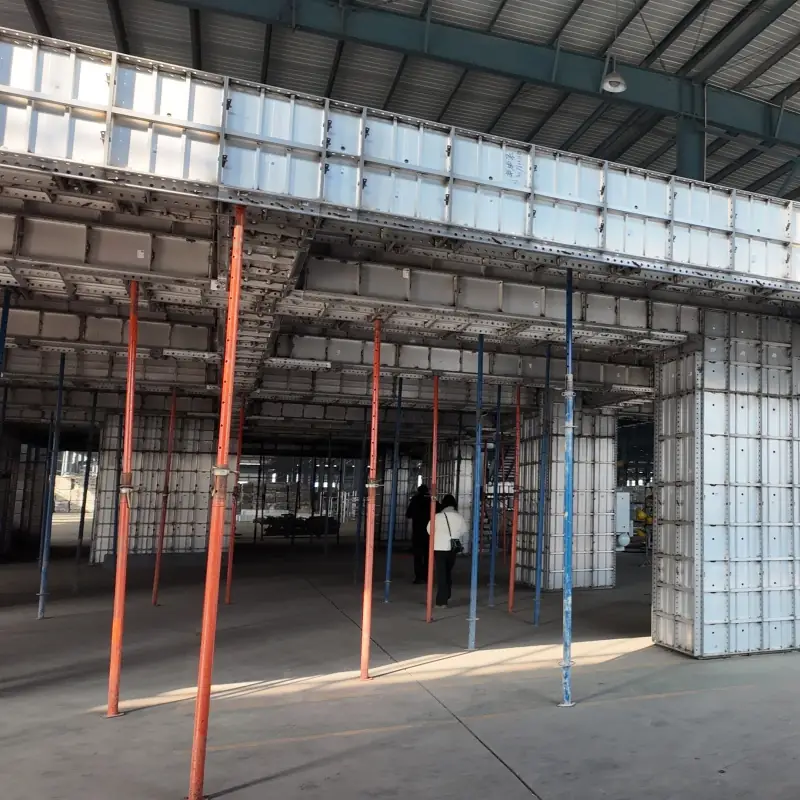
Aluminum formwork relies on more than its main panels. Pins, wedges, ties, braces, and connectors hold individual sections in place while crews pour concrete. When these smaller parts are missing, damaged, or poorly matched, even well-made panels can become difficult to install and align.
For contractors using an aluminum formwork system, accessory planning should begin before materials reach the site. Correct quantities, compatible dimensions, and clear inspection routines help crews assemble wall, slab, and beam forms with fewer interruptions. Understanding each accessory’s function also makes purchasing and reuse decisions more practical.
Connections Must Hold Panels in Position
Panels need secure connections at their edges and junctions. Pins and wedges commonly join adjacent sections through matching holes. Pins and wedges are commonly used to connect adjacent aluminum formwork panels through matching connection holes. The pin is inserted into the designated opening and secured with a wedge to hold the panels together. These components must match the panel design and the manufacturer’s specified connection arrangement to ensure proper engagement and removal during stripping.
Loose or deformed connectors can allow movement during assembly or concrete placement. Crews should check for bent pins, worn wedges, damaged holes, and incomplete engagement. These checks take little time compared with correcting panel displacement after a pour.
Corners and intersections require separate attention. Internal and external corner components connect surfaces that meet at different angles. Their dimensions affect wall geometry and surface continuity. A mismatch may create gaps that need additional sealing or adjustment, increasing labor at precisely the areas where alignment matters.
Ties and Braces Control Form Geometry
Fresh concrete exerts lateral pressure on wall forms. Wall ties and their associated fittings help hold opposing panels together and maintain the specified wall thickness during concrete placement. Their type, spacing, and arrangement should follow the formwork design, wall dimensions, pour conditions, and manufacturer’s instructions. Site teams should follow the approved engineering plan rather than choose tie spacing based on routine practice.
Braces serve a different purpose. They help maintain panel alignment and keep wall forms plumb during installation and concrete placement. Adjustable push-pull props may be used for positioning and stabilizing wall forms, depending on the system design. Their connections and anchorage must be suitable for the specified loads and installation conditions.
Before pouring, supervisors should inspect tie locations, brace attachment points, and the alignment of nearby panels. Checks are particularly important around openings, wall ends, and changes in section thickness. Recording problems before concrete placement is less disruptive than repairing finished surfaces later.
Slab and Beam Components Need Coordination
Horizontal formwork requires a connected arrangement of panels, supporting members, and props. Beam soffits and slab edges must meet at the specified elevations. Small differences at those interfaces can affect concrete dimensions and create extra finishing work after stripping.
Props and their associated support fittings should match the intended formwork configuration. Some systems allow selected panels to be removed while designated props remain in place to support the concrete structure. Such procedures depend on the approved formwork design and the concrete strength requirements. Workers should not remove panels or supports ahead of schedule without following the approved striking procedure.
Staircases and elevator shafts introduce further connection details. Repeated angles, narrow access points, and changes in elevation can complicate assembly. Component drawings should identify which fittings are required at each transition so installers do not substitute parts based on appearance alone.
Accessory Compatibility Affects Site Efficiency
Contractors sometimes treat small components as interchangeable consumables. In practice, aluminum formwork accessories can differ in geometry, engagement method, and intended load path. Similar-looking pins, wedges, or brackets may not provide the same fit when combined with panels from another design.
Purchasing teams should request an accessory schedule linked to the panel layout. It should identify item descriptions, reference codes, quantities, and locations of use. A separate spare-parts allowance can cover expected loss or damage without obscuring the quantities needed for the initial assembly.
This planning becomes particularly relevant on repetitive construction projects. Rongze’s aluminum formwork system includes wall, slab, beam, and column panels, corner components, props, pins and wedges, tie rods, wall ties, brackets, and other connectors. Its modular design supports assembly and dismantling across repeated layouts, making the compatibility between main panels and their associated accessories an important consideration.
Inspection and Storage Protect Reuse Value
After stripping, crews should sort fittings by type and condition. Concrete residue needs to be removed without damaging working surfaces. Components showing cracks, significant deformation, or damaged locking features should be set aside for assessment under the supplier’s instructions.
Storage procedures also matter. Clearly labeled bins reduce mixing between sizes and help workers count stock before the next cycle. Keeping small fittings off muddy ground can limit loss and make visual inspection easier. A simple issue-and-return record helps purchasing teams distinguish normal wear from repeated shortages.
For high-rise projects, repeated floor layouts make inventory records particularly useful. Crews can compare accessory quantities after each stripping cycle and identify recurring losses. Procurement staff can then arrange replacement parts before the next installation stage, reducing the risk of incomplete assemblies and unplanned material requests.
Rongze‘s aluminum formwork system is designed to support more than 300 reuse cycles under proper maintenance while helping achieve smooth, consistent concrete finishes. This stated reuse capability applies to the formwork system as a whole; individual accessories still require regular inspection, maintenance, and replacement according to their condition and the manufacturer’s instructions.
Keep Small Components in the Project Plan
Reliable formwork assembly depends on coordinated components, not panel quantities alone. Connections secure adjoining sections, ties and braces maintain geometry, and support fittings help transfer loads through the planned structure. Checking their fit before installation makes site work more predictable.
For projects using aluminum formwork accessories, the practical priority is a complete component schedule supported by inspection, storage, and replacement procedures. These steps help contractors manage repetitive pours while keeping attention on dimensional accuracy, safe working methods, and the condition of reusable equipment.
