

LED assemblies rely on precise bonding, optical clarity, and dependable protection against environmental exposure. UV-curable adhesives can support these requirements by curing rapidly under suitable ultraviolet light, making them useful for selected bonding and sealing operations.
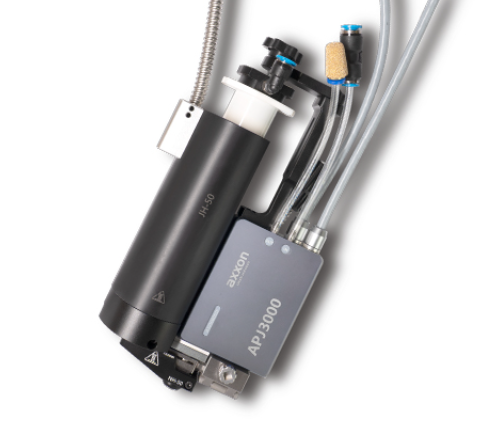
Effective liquids diespending practices help control deposit size and placement, while Axxonauto provides industrial dispensing technology relevant to automated assembly processes where consistent material application matters.
Where UV Adhesives Fit Into LED Assembly
UV-curable adhesives harden when exposed to light within a specified wavelength range, initiating a chemical reaction that transforms the liquid formulation into a solid polymer. Their rapid curing can shorten processing time and reduce the need for extended thermal curing, provided the adhesive and assembly are compatible with the selected UV source.
In LED manufacturing, these materials may be used for lens attachment, selected optical bonding tasks, component fixation, and protective sealing. The appropriate formulation depends on transparency, refractive properties, adhesion to the target substrates, and resistance to heat or moisture. Not every LED joint suits UV curing, particularly when the adhesive must reach areas that light cannot penetrate.
Light access is a central design consideration. Opaque housings, shadowed joints, and deeply recessed bonding surfaces may prevent sufficient UV exposure, leaving uncured material beneath the visible surface. Dual-curing formulations, which combine UV activation with another curing mechanism, may be suitable for certain geometries, but their processing requirements must be confirmed with the material supplier.
| Application | UV adhesive role | Key requirement |
| Lens attachment | Bonding optical components | Transparency and precise placement |
| Component fixation | Localized bonding | Small deposit and fast cure |
| Protective sealing | Perimeter sealing | Continuous coverage and light access |
How to Control Deposit Geometry and Material Placement?
The quality of an LED bond depends partly on how much adhesive reaches the joint and where it is deposited. Excess material can spread into optical areas, cover electrical contacts, or create unwanted residue, while insufficient coverage may weaken attachment or leave gaps through which moisture can enter.
Adhesive dispensing depends on proper attention to viscosity, surface tension, nozzle dimensions, and outlet-to-component spacing. Small dots may suit localized attachment, while continuous beads can provide sealing around a housing or perimeter. The pattern should match the joint design rather than relying on a single dispensing method for every LED assembly.
Material behavior after deposition also affects accuracy. Some formulations spread readily across a surface, whereas others retain their shape until curing begins. Testing the deposit over the expected interval between dispensing and UV exposure helps determine whether the adhesive maintains its intended geometry during production.
How to Coordinate Dispensing With UV Curing Conditions?
UV curing requires the correct combination of wavelength, irradiance, exposure duration, and adhesive chemistry. Insufficient exposure can leave residual uncured material, while excessive exposure or unsuitable process conditions may affect the substrate or adhesive properties. The manufacturer’s curing data should guide initial settings, followed by testing on representative assemblies.
The dispensing and curing stations must operate as a coordinated process. If components move too quickly into the curing stage, the adhesive may not have enough time to settle into the intended joint; excessive delays can also be problematic if the material begins to spread or react before exposure. Production trials should establish a workable interval between deposition, component placement, and irradiation.
Inspection should verify more than whether the adhesive appears solid. Depending on the application, checks may include bond coverage, optical clarity, adhesion strength, and resistance to environmental exposure. Where UV light cannot reach the entire joint, appropriate tests are needed to confirm that the hidden material has cured sufficiently.
How to Coordinate Dispensing With UV Curing Conditions?
LED assemblies can combine small bonding areas, delicate optical surfaces, and components with different shapes and heights. Equipment configuration should reflect these constraints, including access to the target joint, repeatable positioning, material compatibility, and integration with the curing station. A stable process also requires consistent component placement and suitable control of material temperature and supply conditions.
The MYC60 is an industrial dispensing platform designed for automated seal-bond assembly, with applications including potting, THT bonding, gasketing, and thermal interface material dispensing. For LED production involving UV-curable adhesives, equipment selection should also account for the curing system and the material’s specific exposure requirements. These capabilities are relevant to production environments that handle different fluid-application tasks, although suitability for a specific UV adhesive and LED joint must be verified against the material’s viscosity, curing requirements, and process specifications.
Quality monitoring can connect dispensing results with final assembly performance. Deposit dimensions, shot weight, curing conditions, and inspection findings provide useful evidence when a defect occurs. Tracking these variables across production batches can help distinguish problems caused by material variation from those related to equipment settings, component positioning, or UV exposure.
Conclusion
UV adhesive dispensing can support LED assembly by providing controlled bonding, localized fixation, and selected sealing functions without requiring prolonged thermal curing. Successful implementation depends on matching the adhesive to the joint, maintaining accurate deposits, and validating the full curing process rather than treating dispensing and irradiation as separate operations.
Axxonauto offers industrial dispensing technology for automated manufacturing applications, while each LED process requires material-specific testing to confirm bond quality and long-term reliability.
FAQs
Why Are UV Adhesives Used in LED Manufacturing?
UV adhesives can cure rapidly under suitable light exposure and support selected bonding, fixation, and sealing tasks. Their suitability depends on optical requirements, substrate compatibility, joint geometry, and access to the curing light.
Can UV Adhesive Cure Inside an Opaque LED Housing?
UV light cannot reliably cure adhesive in areas it cannot reach. A suitable dual-curing formulation may address some shadowed joints, but the curing method and resulting bond properties must be verified through testing.
How Can Excess Adhesive Be Prevented Around LED Components?
Control the deposited volume, nozzle position, dispensing pressure, and material flow behavior. Inspection of deposit dimensions and spread before curing can help identify settings that cause contamination or inconsistent coverage.
What Should Be Checked When Selecting Dispensing Equipment?
Important considerations include the adhesive’s viscosity, required shot size, placement accuracy, material compatibility, production speed, and integration with the curing process. Axxonauto equipment capabilities should be evaluated against these application-specific requirements rather than assumed to suit every UV adhesive.
