

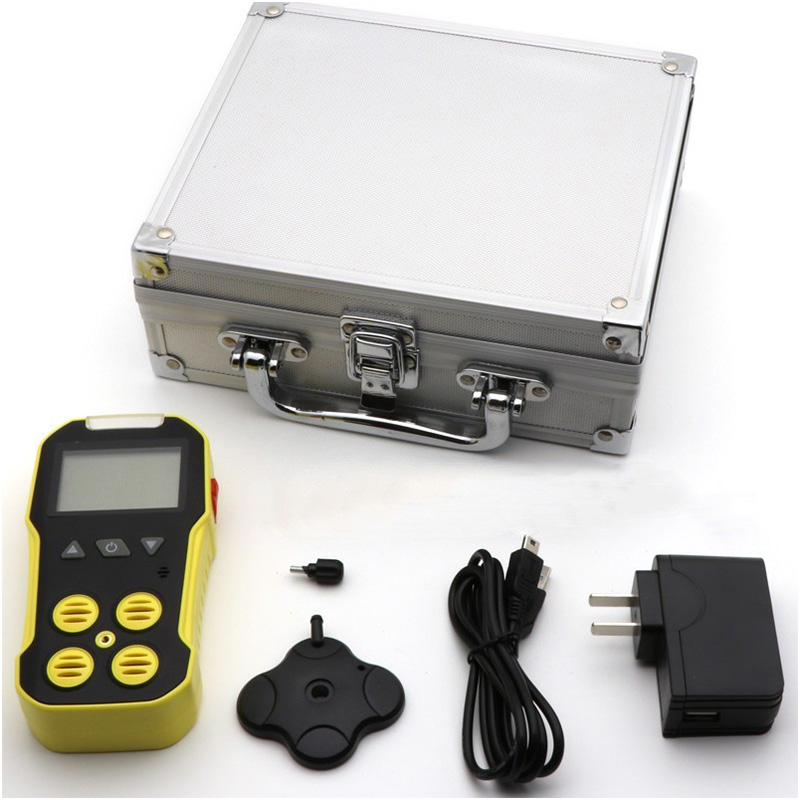
Without its calibration cap, a portable detector may be ready to power on and still hold up a startup test that requires test gas at the sensor. A complete gas detection equipment kit for a new plant pairs fixed monitoring points and mobile instruments with the accessories and consumables needed to put each one into service and maintain it afterward.
Commissioning is a good way to work backward from the plant’s first day of operation. Each task calls for an instrument and a way to verify that it works as intended. The kit covers what remains installed, what moves with a worker, and what stays in the maintenance store so the same checks can be performed again.
Start With the Jobs on the Commissioning List
Continuous monitoring, mobile rounds, remote sampling, and routine maintenance call for different combinations of gas detection equipment. A stationary point has a sensor and an alarm destination. A technician who moves between production areas needs an instrument configured for the planned route. Remote sampling adds a separate question about how air reaches the sensor.
For each job, the equipment schedule can record the target gas, instrument location or route, intended reading units, and the group responsible for the device. A specification from the gas detector manufacturer belongs with the equipment entry so the person receiving it can verify the exact configuration rather than rely on a product family name.
Working through the first use of each instrument exposes omissions early. A fixed point needs to send a signal to an identified destination. A portable instrument needs a means of charging and a way to accept test gas for its checks. Each row on the commissioning list can name the deliverable and show who is expected to demonstrate it.
Follow the Signal From Sensor to Panel
Signal compatibility determines which fixed transmitter and receiving panel can form a working chain. With a 4–20 mA transmitter, the receiving channel needs to accept that input and map the signal to the configured measurement range. Channel assignments also need to identify the gas and point so staff can trace an alarm back to the right location.
At a compatible input on the Bosean BH-50, a signal from a BH-60 transmitter can be assigned to a specific channel. BH-50 versions differ in capacity, with options for one, two, or four channels. The panel displays readings and provides audible and visual alarms, along with relay outputs for connection to other equipment where the installation calls for them.
The detector count therefore covers only part of the purchase list. The installation team must also match the input type and channel count to the layout and verify the intended relay connections. Documentation from the gas detector manufacturer gives the team a basis for checking the particular versions before the fixed units are installed.
Assemble the Mobile Kit and Optional Sampling Parts
Daily rounds rely on more than the instrument that appears on the roster. The accessories for gas detection equipment used on rounds need to cover charging, functional tests, and calibration. For a remote check, the list also needs compatible parts that carry the sample from its collection point to the sensor.
Among the supplied items for the Bosean BH-4A are a charger, calibration cap, communication cable, manual, and carrying case. The cap has an immediate purpose during startup because it connects the test gas delivery setup to the instrument. Keeping track of that part matters again when the unit comes back from the floor for a scheduled check.
Remote collection may call for a separate pump. The ZC-600 is a diaphragm pump that draws air through a sample line and delivers it through a calibration cover to a compatible detector. Listing the pump, confirmed fittings, and test gas as separate items keeps the optional sampling arrangement from being mistaken for something already in the portable case.
Demonstrate the Kit at Handover
Functional testing and calibration answer different questions during acceptance. The bump test belongs on the startup checklist as a witnessed event, with the display response and each expected warning recorded during exposure to challenge gas. Calibration uses gas of a known concentration as a measurement reference. The two activities can require related supplies, but their results document different aspects of readiness.
Procedures from the gas detector manufacturer make the acceptance checks specific to the installed configuration. The record can identify the gas and instrument used for a portable check or the transmitter and receiving channel checked in a fixed system. Any alarm or relay function being accepted can be recorded against the point from which it was tested.
For any Bosean units used in the installation, completed tests can be filed under the specific model and channel assignments. Keeping the instrument records alongside the inventory also clarifies where the caps, chargers, test supplies, and any remote sampling parts will be stored once the commissioning crew has left.
Installer and plant staff can jointly confirm the instruments, alarm paths, accessories, and test supplies before responsibility passes to operations. The inventory then describes a system the receiving team knows how to use. Its completeness is demonstrated when that team can repeat the functional checks and calibration with the items it has on hand.
SEO Title: Gas Detection Equipment for a New Production Plant
Meta Description: Plan a gas detection kit for a new plant, including fixed detectors, panel inputs, portable sampling equipment and supplies for handover checks.
