

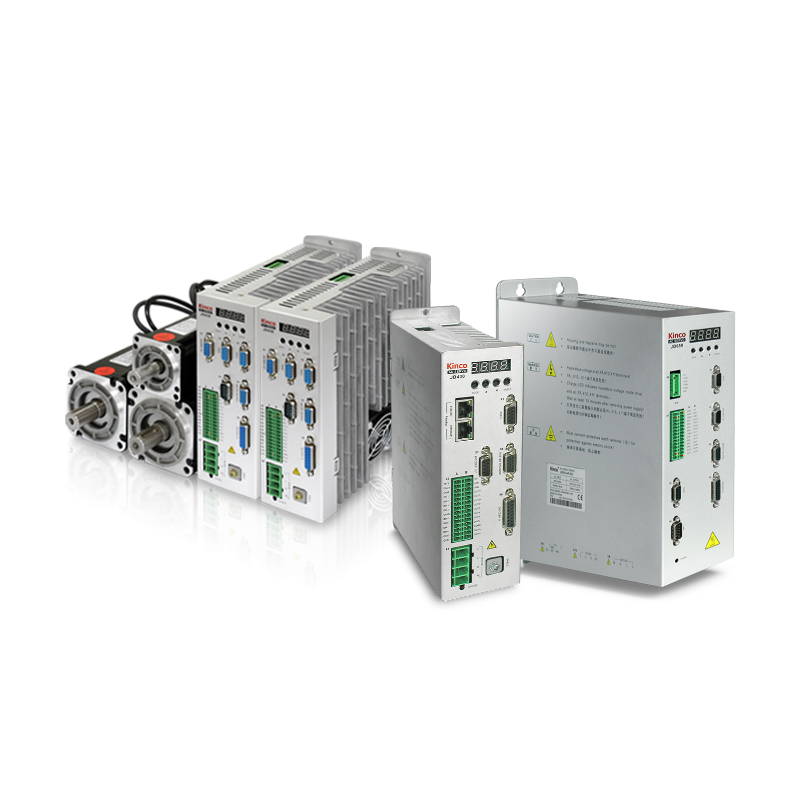
Industrial automation systems commonly use either cabinet-mounted servo drives connected to separate motors or integrated servo systems that combine the drive and motor in one unit. Each architecture offers different advantages in installation space, wiring, and system configuration.
Choosing between them depends on axis count, power requirements, machine layout, operating environment, and maintenance needs. Understanding these differences helps machine builders select a motion control architecture suited to their equipment.
Evaluating Cabinet-Based Drives for Dynamic High-Power Machinery
Centralized panel architectures excel in applications demanding high power output, complex functional safety topologies, and centralized thermal control. Housing power electronics inside protective electrical cabinets safeguards sensitive semiconductor components from harsh ambient factory conditions, severe mechanical vibration, and airborne liquid spraying.
- High power density configurations handle high current requirements during rapid dynamic acceleration.
- Centralized cabinet cooling systems maintain stable operating temperatures for high-power transistors.
- Standardized panel layout simplifies routine electrical inspections and component replacements.
Deploying a high-performance industrial automation servo drive framework gives machine builders precise control over high-torque industrial machinery. Modern cabinet-mounted drives accommodate wide input voltages, supporting both single-phase and three-phase AC power lines. Furthermore, placing drive modules within centralized electrical cabinets shields sensitive logic boards from environmental contamination on active production floors.
Centralized control setups also simplify multi-axis power sharing over common DC bus networks. Managing regenerative braking energy centrally prevents overvoltage trips during heavy deceleration cycles while reducing overall electrical energy consumption across complex multi-axis machinery setups.
Architectural Benefits of Decentralized Integrated Servo Platforms
Decentralized motion platforms shift power conversion and control processing directly onto individual machine axes, minimizing centralized panel space requirements. By housing drive electronics on the motor frame, equipment builders reduce total wiring length and remove bulky external drive enclosures from main machine chassis structures.
- Substantial reduction in panel footprint frees floor space for auxiliary process equipment.
- Shorter motor cable runs lower electromagnetic interference risks and signal degradation.
- Modular axis design simplifies machine expansion and field retrofitting routines.
Integrating decentralized drive hardware reduces cable routing complexity between central controllers and peripheral motion axes. Pre-engineered motor-drive combinations reduce manual assembly hours, enabling machinery manufacturers to shorten equipment fabrication cycles. Additionally, standardized fieldbus interfaces allow decentralized units to connect directly to supervisory programmable logic controllers via streamlined daisy-chain cabling topologies.
However, machine builders must account for localized thermal management when deploying decentralized drive platforms. Operating drive electronics directly on hot motor frames requires robust heat dissipation paths and effective structural cooling to prevent premature semiconductor aging during continuous duty cycles.
Comparing Operational Specifications: Kinco JD Series vs Decentralized Hardware
Comparing technical hardware specifications helps system designers align motion hardware with specific application demands. Hardware suppliers like Kinco develop flexible motion control solutions designed for centralized industrial control cabinets as well as modular machine architectures.
- Broad AC input supply compatibility handles diverse global industrial power grids efficiently.
- Multi-protocol fieldbus interface options support smooth integration with industrial controllers.
- High-resolution feedback support ensures smooth velocity tracking and precise position control.
Kinco JD Series AC servo drives feature European-standard terminal architecture, simplified field wiring, and IP20 cabinet mounting designs. Supporting single-phase or three-phase 220VAC and three-phase 380VAC input power across current capacities from 7Arms up to 18Arms (with peak currents reaching 65AP), these units drive demanding CNC equipment, packaging lines, and industrial robotics. Equipped with high-speed encoder outputs up to 2MHz, STO functional safety, and support for 20-bit absolute encoders, a quality AC servo drive delivers reliable motion regulation.
By contrast, integrated drive units excel in compact, low-voltage DC applications like mobile AGV platforms and space-constrained conveyor systems. Evaluating current requirements, operating ambient temperatures, and enclosure protection ratings helps engineers select the appropriate control topology.
Safety Protocols, Noise Immunity, and Wiring Efficiency
Maintaining signal integrity and functional safety remains crucial when implementing high-speed motion control networks across busy manufacturing plants. Power cables passing through long cable tracks can radiate electromagnetic noise, potentially disturbing adjacent low-voltage sensor signals and fieldbus data lines.
- Short cable lengths in integrated setups reduce radiated electromagnetic interference across machinery.
- TheSafe Torque Off interface supports connection to external safety controllers, switches, or sensors for machine-level safety control.
- Shielded cabinet wiring in centralized setups protects control loops from ambient electrical noise.
Centralized drive cabinets utilize shielded power cables and filter modules to maintain high noise immunity across extended production corridors. Housing logic controllers alongside power drives streamlines the wiring of safety relays, limit switches, and emergency stop circuits.
Conversely, integrated systems minimize cable runs to short network loops, significantly lowering cable material costs and installation labor. Incorporating hardware-based Safe Torque Off mechanisms directly into both cabinet drives and decentralized platforms ensures fast torque cut-offs during emergency conditions without dropping network communication links.
Selecting the Optimal Motion Control Architecture for Automated Equipment
Choosing between centralized panel drives and decentralized integrated servo systems depends on power requirements, machine layout, axis count, and operating conditions. Cabinet-mounted drives are suitable for equipment requiring centralized power distribution and multi-axis control, while integrated servo systems offer a more compact arrangement for machines with distributed motion axes.
Before making a selection, engineers should compare motor power, input voltage, communication protocols, cooling requirements, and protection ratings. These factors help determine the installation complexity, maintenance requirements, and suitability of each architecture for the intended application.
Kinco‘s JD series AC servo drives are designed for cabinet-based installations, while its iSMD series integrates the servo drive and motor into a single unit. Comparing their respective specifications and configurations allows machine builders to identify suitable motion control components for different equipment designs.
