

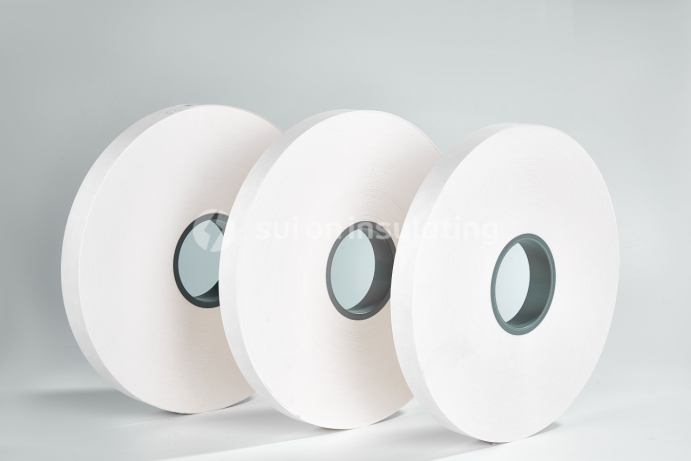
When designing transformers, material selection is critical for ensuring long-term reliability and performance. Sui On Insulating offers a range of solutions, including Nomex® electrical insulation products, that are widely applied in the power and energy industries. Among these, Nomex 410 and Nomex 415 are commonly chosen for high-temperature and high-stress applications. They provide consistent dielectric properties and thermal stability, making them suitable for transformers, motors, and other electrical equipment.
Material Properties Comparison
Nomex 410 is known for its robust mechanical strength and resistance to tearing, along with excellent thermal stability up to 220°C. These characteristics make it a reliable choice for insulation layers that require dimensional stability under prolonged heat exposure.In contrast, Nomex 415 is specifically engineered for thinner-gauge applications,offering high dielectric integrity in a reduced profile.This makes it an ideal choice for compact transformer designs where minimizing insulation volume is as critical as maintaining electrical performance.
Application Suitability
In practical applications, Sui On Insulating provides guidance based on extensive experience in power transformers and electrical motors. Nomex® electrical insulation products from the company are certified and meet rigorous UL standards, ensuring consistent quality across batches. Nomex 410 is typically preferred for traditional transformer cores that require high-temperature endurance and minimal dimensional change. Nomex 415, on the other hand, is preferred for high-density windings and compact power electronics where precision in thickness and space-saving configurations are essential without compromising reliability.
Conclusion: Making an Informed Choice
Selecting between Nomex 410 and Nomex 415 depends on the specific demands of transformer design, including temperature tolerance, mechanical stability, and winding complexity. Sui On Insulating supports clients with a broad range of Nomex 410 solutions and practical guidance to ensure optimal material choice. By considering mechanical properties, thermal performance, and application requirements, engineers can ensure transformers operate reliably and efficiently over their service life.
