

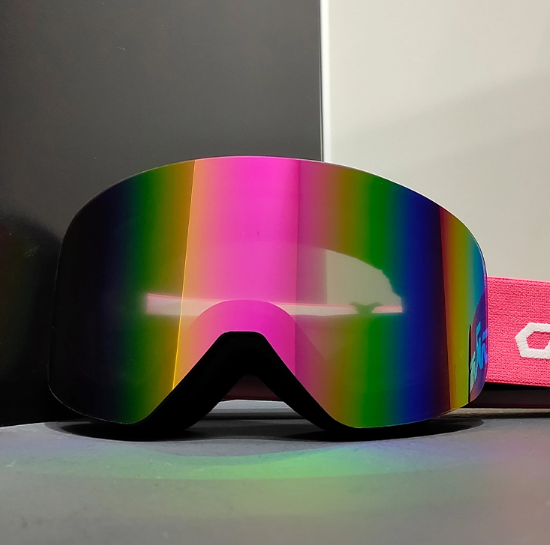
Snow sports retailers face a practical challenge when building eyewear ranges. Skiers encounter changing light, shifting weather, and different visibility needs during a single trip. A fixed-lens model may serve one set of conditions but leave shoppers looking for greater flexibility.
For retail buyers, magnetic ski goggles offer a way to discuss lens changes as part of the product selection process. The interest is not only about convenience on the slopes. It also raises questions about assortment planning, staff demonstrations, replacement lenses, and long-term customer support.
Changing Conditions Affect Lens Demand
Bright sunshine, flat light, and snowfall place different demands on ski lenses. Lens tint and visible light transmission influence how much light reaches the eye. Contrast-enhancing options may also help users distinguish changes in snow texture under suitable conditions.
Retailers should explain these differences rather than treating darker lenses as universally superior. A darker tint can be comfortable in strong sunlight but less suitable when clouds reduce available light. Product labels should state relevant lens properties so customers can compare options.
Interchangeable lenses let shoppers consider more than one lighting scenario without selecting entirely separate goggles. However, lens switching still requires careful handling. Users should follow the manufacturer’s fitting instructions and check that the lens is seated correctly before returning to the slope.
What Magnetic Attachment Changes
Traditional interchangeable systems may use clips, tabs, or other frame connections. Magnetic mechanisms offer a different attachment method, which can make the removal and replacement process easier to demonstrate at a retail counter. The precise fitting steps depend on the design.
That demonstration matters because customers often judge unfamiliar features by using them. Store teams can show how a lens is removed, aligned, and reattached. Staff should also clarify whether an additional locking mechanism is present rather than assuming that all magnetic designs work alike.
Buyers comparing magnetic lens ski goggles should ask suppliers for handling guidance and compatible replacement lens options. Lens retention, frame fit, and impact performance must be evaluated for the specific model. A convenient lens-change feature does not remove the need for proper protective eyewear performance.
Assortment Planning Becomes More Detailed
Stocking interchangeable eyewear changes the purchasing conversation. Retailers need to decide which lens choices belong in a core range, which are optional, and how replacement lenses will be presented online or in-store. Too many similar variations can complicate purchasing decisions. Retailers should also decide whether spare lenses will be sold individually, bundled with goggles, or reserved for customer service requests.
A useful starting point is to group lens choices by intended lighting conditions and customer preferences. Buyers can then compare demand across destinations, seasons, and retail channels. Product descriptions should distinguish lens material, polarization, photochromic behavior, and contrast features without suggesting that these terms mean the same thing.
Compatibility records are especially important. Replacement lenses should be identified by the exact supported goggle model. Clear SKU descriptions, packaging labels, and photographs can reduce incorrect orders and avoid unnecessary returns from customers who own a different frame.
A Model Example for Custom Ranges
For buyers evaluating a frameless design, the YH693 is one example of a customizable product. Its cylindrical lens has a wide-field design, while the interchangeable magnetic lens system supports different lens selections. Available options include polycarbonate, polarized, photochromic, and high-contrast lenses.
YIJIA Optical offers this model for OEM and ODM projects. Its flexible TPU frame can be customized, and buyers can select single-, double-, or triple-layer high-density foam. The stated features also include UV400 protection, anti-fog and anti-scratch functions, a soft nose guard, and an elastic anti-slip strap.
The design is OTG compatible, allowing use over prescription glasses. Retail buyers should still check fit with representative prescription frames and confirm which lens option is specified in each order. These checks help translate a feature sheet into accurate product listings and customer guidance.
Procurement Questions Go Beyond Appearance
Magnetic attachments deserve attention during sampling. Retail teams can inspect alignment, repeated removal, lens edge contact, and ease of use with gloves. They should also ask how replacement lenses are packaged and whether the supplier provides instructions for cleaning and storage.
Testing claims require equal care. Buyers should request the applicable reports for impact resistance, optical performance, UV protection, and other advertised functions. A feature stated in marketing material is not a substitute for reviewing the test method and the version of the product being ordered. Documentation should match the actual lens and frame combination, especially when a private-label collection offers several configurations.
For private-label programs, YIJIA Optical has a manufacturing operation with in-house design and production capabilities. They report a seven-day sample dispatch target and a 25–30-day bulk production timeframe. Buyers should confirm schedules against specifications, quantity, and the approved sample before finalizing launch dates.
What Makes the Switch Worthwhile
Retail interest in magnetic ski goggles reflects the appeal of adaptable lens choices and an easier product demonstration. Yet the commercial benefit depends on clear compatibility information, reliable quality checks, and an assortment customers can understand.
Before expanding a range of magnetic lens ski goggles, buyers should compare lens options, test samples, verify claims, and plan replacement-lens stock. A structured review helps retailers decide whether the format matches their customers and sales channels, rather than adopting it solely because the attachment method is new.
