

Maintenance costs at a seasonal park are shaped by what happens at both ends of the operating year. Equipment that is closed carelessly in autumn is often the equipment that fails in spring, which makes Water Slide upkeep far more expensive than a planned shutdown and restart would be.
Close the Season With a Full Inspection
A closing inspection records the condition of each attraction while the season’s wear is still visible. Fiberglass surfaces, flume joints, support hardware, stair treads, pumps, valves, and drainage points can be photographed and logged, with each defect marked as urgent, scheduled, or monitor. That record becomes the work order for the shutdown period instead of a list kept in someone’s memory.
Cleaning belongs in the same step. Deposits, chemical residue, and organic growth left on surfaces over winter can become harder to remove and can mask early cracks or wear. Washing the slide and landing area before shutdown makes the next inspection more reliable.
Responsibilities should be named before the gates close. A closing plan that says who drains which system, who protects which components, and who signs off the final inspection prevents tasks from falling between departments.
Protect Water Systems and Surfaces Over the Off-Season
Water systems need a plan of their own. Pipework, pumps, and filters that hold water through cold weather can be damaged, so drainage and protection procedures should follow the equipment documentation. Jinchao‘s installation and maintenance guidance is a useful reference for what the manufacturer expects, and any procedure should be confirmed against the documents supplied with the specific equipment.
Fiberglass surfaces also benefit from protection. Covers, drainage of standing water, and removal of debris reduce the chance of damage from freezing, UV exposure, or trapped moisture. Components that cannot be protected in place can be removed and stored according to the manufacturer’s advice.
Chemical systems need attention as well. Dosing equipment, probes, and stored chemicals should be handled according to safety rules and supplier guidance, with sensors checked and recalibrated before they are returned to service.
Planning Maintenance Around Operating Cycles
Seasonal parks face a different challenge because equipment may remain unused for extended periods and then return to intensive service within a short window. Waiting until several days before reopening compresses inspection, repair, spare-part procurement, testing, and staff preparation into the same period. Jinchao’s installation guidance describes dry inspection and wet testing as separate stages, with operational teams trained in startup routines, pump monitoring, chemical balancing, and emergency procedures.
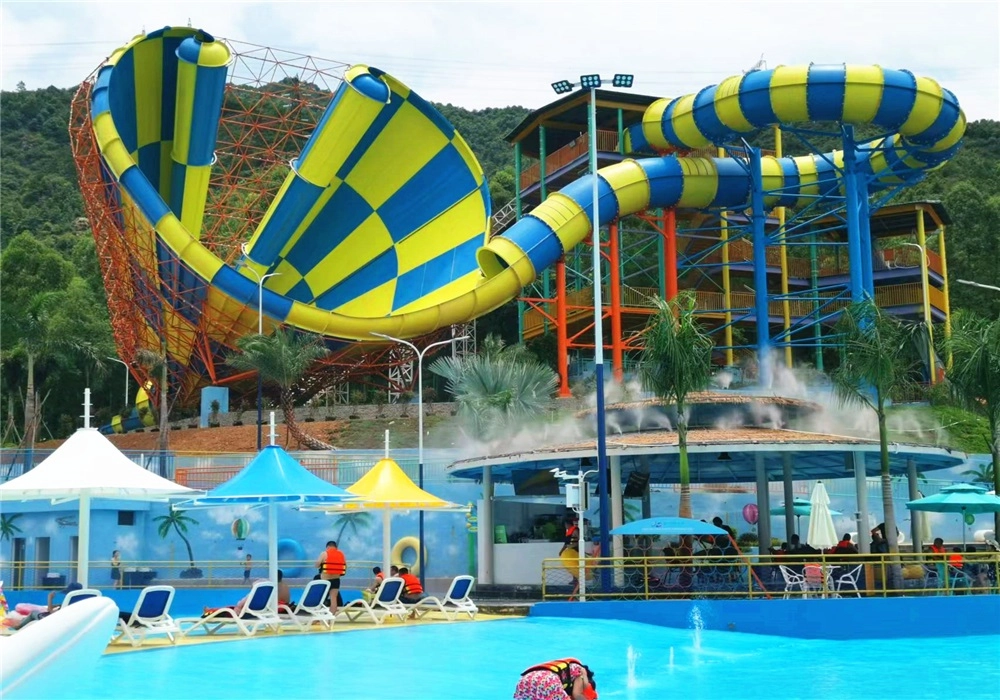
The attraction itself should also be considered according to its operating profile. Jinchao’s Tornado slide has a stated starting height of 12–18 meters and accommodates up to four riders, with a visually prominent funnel-style configuration intended to attract attention. Its scale means inspection planning needs to account for access to elevated structures, rider-contact surfaces, joints, support areas, and the surrounding splash zone rather than focusing only on the visible slide surface.
Spare parts should follow the same calendar. Frequently used seals, gaskets, hardware, and other wear components are easier to source before a busy season than during an unexpected shutdown. Maintenance teams can also schedule deeper mechanical checks during lower-demand periods, leaving daily operating hours for routine inspections and minor corrective work. This separation reduces the chance that preventive work will interfere with peak visitor periods.
Conclusion
A durable maintenance strategy is less about spending more and more about spending at the right time. A planned closing inspection, protected equipment, and a reopening schedule that leaves room for repairs and testing turn seasonal shutdowns into a cost-control tool rather than a source of surprises.
A knowledgeable water park manufacturer can also provide technical documentation and operational guidance that supports this process. In the long run, Jinchao’s experience across planning, manufacturing, installation, and water park projects provides a useful reference for operators assessing how maintenance decisions affect the working life and operating budget of an aquatic destination.
