

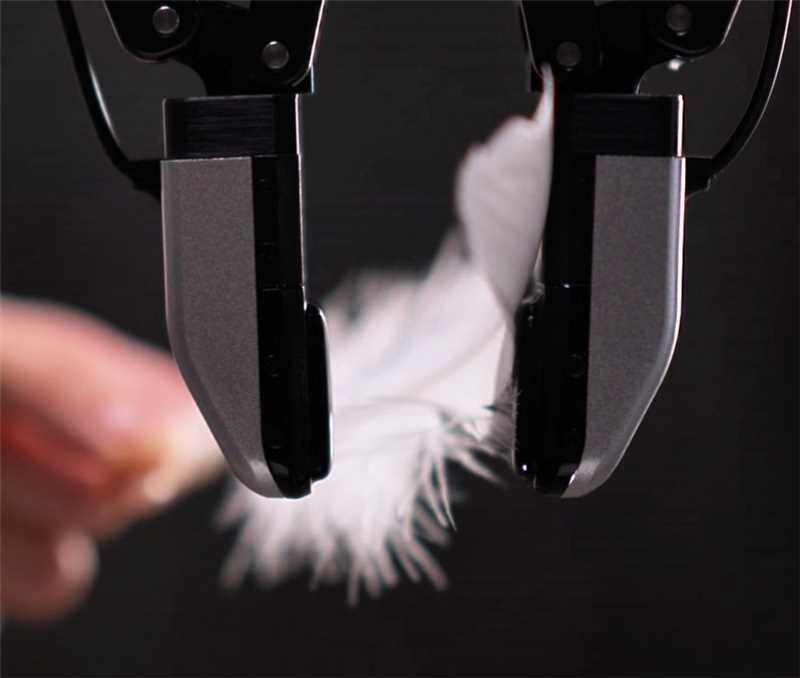
For both engineers designing advanced robotics and consumers using next-gen devices, understanding what is tactile motion perception is key to unlocking more natural interaction between machines and the physical world. At its core, it describes the ability to sense and interpret movement across the skin’s surface, a fundamental aspect of tactile sensing that informs everything from grip adjustment to texture recognition. This sophisticated process goes beyond simple touch to detect direction, speed, and patterns of slippage or motion. Companies like Daimon are at the forefront, translating this biological principle into advanced sensor systems that enable machines to interact with their environment with unprecedented nuance and safety.
Tactile Motion Perception Fundamentals
Tactile motion perception is a complex neurological and mechanical process. It begins when an object moves across the skin, stimulating specialized mechanoreceptors at different depths and rates. These receptors encode information about the velocity, direction, and frequency of the stimulus. The brain then integrates this spatially and temporally distributed signal to construct a coherent perception of motion. In engineering, replicating this capability requires high-density sensor arrays that can capture minute shear forces and dynamic pressure changes. This foundational tactile sensing capability is what allows a system to distinguish between a static hold and a slipping object, a critical function for any application requiring dexterous manipulation.
Daimon Sensing Technology Applications
Daimon implements principles of tactile motion perception through highly engineered sensor systems. Their technology, featuring over 40,000 sensing units per square centimeter, captures multiple sensing modalities simultaneously to provide rich, real-time tactile information. This high-resolution data allows robots in manufacturing and logistics to handle fragile or irregular items by detecting the earliest signs of slip, enabling immediate corrective action. For consumer electronics, this level of perception tactile detail can lead to more responsive interfaces and adaptive devices. Daimon’s approach focuses on providing the raw data fidelity necessary for systems to achieve true environmental awareness and interaction.
Motion Detection through Touch
Motion detection through touch is a specific output of tactile motion perception systems. It is the actionable result of processing raw sensor data to identify movement vectors. This capability answers a critical need: Does tactile feedback enable fine manipulation? The answer is a definitive yes. By providing real-time force measurement and instant response to shear forces, these systems grant machines the “feel” needed for tasks like threading a needle, polishing a curved surface, or securely holding a wet glass. The detection isn’t just about presence or absence of motion; it quantifies it, allowing for proportional and graceful control responses that are essential for both industrial precision and safe human-robot collaboration.
Conclusion
Tactile motion perception is the bridge between simple contact and intelligent physical interaction. It empowers machines to handle objects with care, adapt to unexpected changes, and operate safely alongside humans. The translation of this biological concept into reliable technology requires immense data density and processing speed, as demonstrated by advanced sensor systems. For businesses and developers looking to integrate this sophisticated sense into their products, partnering with innovators who provide both the hardware and the application support is crucial. Exploring the solutions offered by Daimon can be a step toward building machines that don’t just touch, but truly understand movement through touch.
