

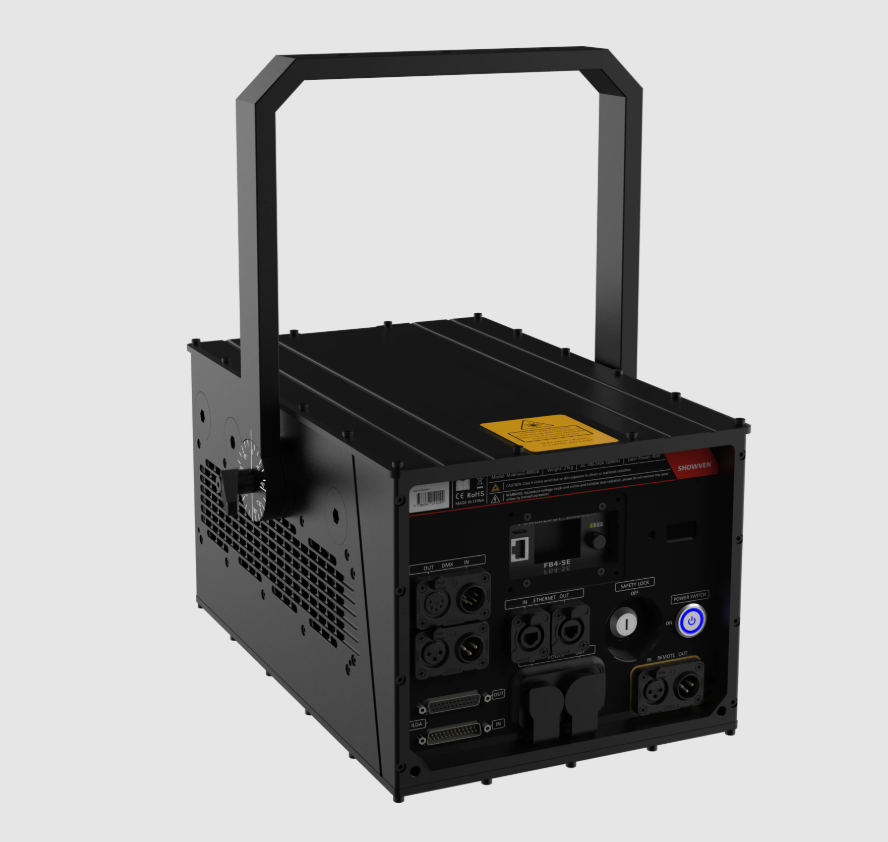
Choosing the right outdoor laser lighting can transform an event, whether it’s a massive music festival, a stadium opening ceremony, or a high-energy DJ set. However, selecting a unit that can withstand the elements while delivering professional-grade performance requires careful consideration. The market is filled with options, but for applications demanding high power, precision, and durability, focusing on industrial-grade features is essential. This guide will walk you through the critical factors to consider, ensuring your investment is both brilliant and robust.
Understanding Durability: The Crucial IP Rating and Build Quality
The primary concern for any piece of outdoor electronic equipment is its resistance to environmental factors, namely water and dust. This is where the Ingress Protection (IP) rating becomes the most critical specification for waterproof outdoor laser lights. The IP rating is an international standard that defines the sealing effectiveness of electrical enclosures against intrusion from foreign bodies and moisture. For outdoor, semi-permanent, or touring installations, an absolute minimum rating of IP65 is recommended. The ‘6’ denotes total protection against dust ingress, while the ‘5’ signifies protection against low-pressure water jets from any direction. Furthermore, a unit with an IP65 housing, often featuring a multi-layered or sectional design, offers peace of mind against rain, snow, and general atmospheric humidity. Beyond the rating itself, examine the construction material—a sturdy, corrosion-resistant alloy is superior, as are sealed cable entries and robust mounting hardware. These physical attributes collectively determine the lifespan and reliability of the laser light in challenging outdoor environments.
Additionally, the internal components require protection from the heat generated during operation. A sophisticated cooling system is a hallmark of a professional-grade unit. Look for specifications detailing active cooling features, such as a well-engineered fan control system. An advanced system will employ Pulse Width Modulation (PWM) fan control to adjust fan speed based on real-time temperature monitoring, not only ensuring over-temperature protection but also contributing to noise reduction. This meticulous engineering is vital, as excessive heat can quickly degrade the laser diodes, prematurely dimming the colors and reducing the overall output power. The careful management of heat and moisture ensures that the laser continues to deliver vibrant, consistent performance even after prolonged use outdoors.
Performance and Safety: Key Features for Festival Laser Lights
Once durability is established, the focus shifts to performance and safety, especially when the lights are intended for large-scale shows or festival laser lights. For professional stage and event use, a full-color RGB (Red, Green, Blue) laser powered by pure diode sources is non-negotiable. Pure diodes provide superior color stability, brightness, and beam quality compared to diode-pumped solid-state (DPSS) systems, offering a vast color palette for complex visual effects. The output power, measured in milliwatts (mW) or watts (W), must be appropriately matched to the size of the venue or projection distance. A large outdoor stage or stadium requires a significantly higher output than a small indoor venue to maintain visual impact.
Furthermore, safety is paramount for high-powered lasers. Reputable manufacturers integrate comprehensive safety configurations that adhere to international regulations. Key safety features include a physical safety switch or key lock to prevent unauthorized operation, and a remote emergency stop (E-stop) function, which is often mandatory for compliance with laser safety protocols. These features must be easily accessible and reliable, ensuring that the laser output can be immediately disabled if a hazard arises. A product that has received international recognition for its design, such as an A’ Design Award winner, often signals a commitment to both aesthetic appeal and operational excellence. For instance, a model like the Maiman30—renowned for its ideal suitability for festival laser lighting—showcases this blend of high performance and engineered safety, making it a reliable choice for event planners and lighting designers.
The Value of Partnership: Choosing Your Brand and Service
The final, often overlooked, consideration is the relationship with the supplier. When investing in high-end, specialized equipment, the brand’s industry standing and the quality of its after-sales support become integral parts of the total product value. A brand that primarily serves the B2B (business-to-business) segment—such as providing solutions for DJ setups, major stages, music festivals, and sports event opening ceremonies—demonstrates a commitment to rugged, professional-grade technology rather than consumer novelty. This focus translates directly into more reliable hardware and software designed for continuous, demanding use.
The overall dimensions and weight, such as a product size around , are also practical considerations for rigging and transport, especially for touring productions. However, the true security of your investment comes from the manufacturer’s guarantee. A comprehensive after-sales service, including detailed installation guidance and technical support, ensures that your crew can quickly integrate the new equipment. Moreover, a robust warranty, such as a 12-month period, offers crucial protection and peace of mind. By partnering with a global provider of high-end stage technology, you are not just buying a light; you are securing a solution backed by industry expertise. Companies like Showven Laser embody this professionalism, offering cutting-edge pure diode technology in durable, IP65-rated enclosures, making them a trusted name for event organizers who cannot afford equipment failure. This holistic approach to product quality and customer care is the surest way to guarantee success for any spectacular outdoor illumination project.
