

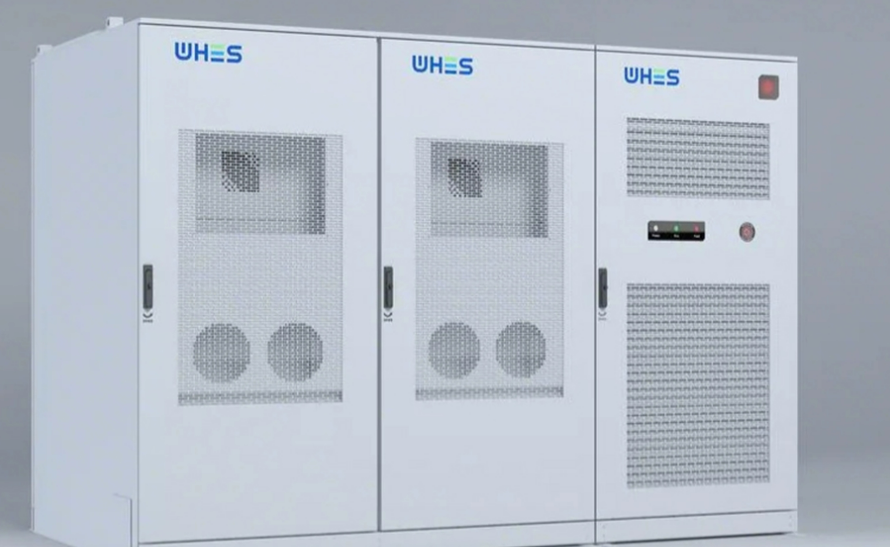
WHES, a manufacturer specializing in scalable energy solutions for installers, distributors, and system integrators, develops advanced platforms for commercial energy storage applications. As energy demand in industrial and commercial environments continues to evolve, system flexibility has become a core design requirement. A modular ESS enables phased deployment and future capacity expansion without requiring a complete system redesign. In modern commercial energy storage projects, modular architecture plays a key role in aligning initial investment with long-term energy growth strategies.
Scalable Architecture and Flexible Configuration
A primary advantage of a modular ESS is its ability to support flexible capacity configurations based on project requirements. WHES PC-G2 62.5–250kW/500kWh C&I energy storage system is designed with a modular AC/DC architecture, allowing 2, 4, 6, or 8-hour energy configurations. This flexibility enables integrators to match system design with varying commercial energy storage demand profiles, from short-duration peak shaving to extended discharge applications.
The system also supports up to six units in parallel, reaching a total capacity of 1.5MW / 3MWh. This allows expansion from an initial installation to larger-scale deployments without changing the core infrastructure. For modular ESS deployments, this scalability ensures that energy systems can grow in line with operational demand and business development.
Operational Efficiency and Expansion Readiness
Beyond capacity flexibility, a modular ESS improves operational efficiency through standardized design and reduced maintenance complexity. WHES integrates patent wall-mounted liquid cooling with automatic fluid refill technology, reducing maintenance workload and improving thermal stability. The system also operates at low noise levels below 65 dB, making it suitable for commercial environments with strict operational constraints.
For commercial energy storage applications, the ability to expand capacity without disrupting existing operations is a critical advantage. Modular architecture allows additional units to be integrated seamlessly, ensuring consistent performance across all system stages while minimizing downtime during expansion processes.
Long-Term Value for Energy System Integrators
For energy system integrators, adopting a modular ESS approach provides a structured pathway for scalable deployment. WHES PC-G2 platform enables phased installation strategies, allowing commercial energy storage systems to evolve alongside energy demand growth. With flexible configuration options and parallel expansion capability, modular systems support long-term infrastructure planning while maintaining technical consistency. This ensures that energy storage investments remain adaptable, efficient, and aligned with future operational requirements.
